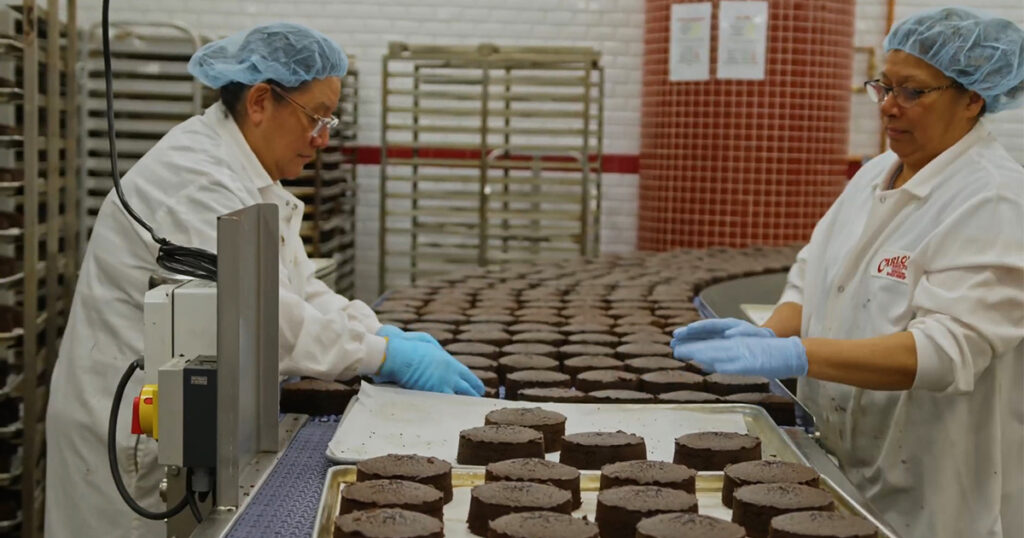
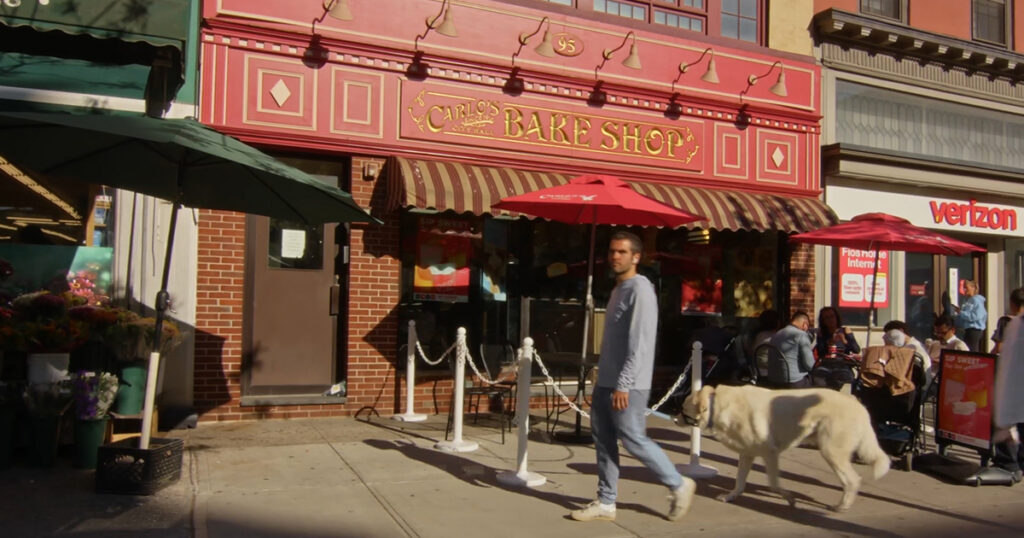
Buddy Valastro, the celebrity baker behind TLC’s Cake Boss, is cooking up more than elaborate cakes these days. Just minutes from Carlo’s Bakery’s famous Hoboken location, he’s bringing that same creativity to the equipment and processes used to package the bakery’s products at its manufacturing facility in Jersey City, New Jersey.
Working with Combi Packaging Systems, Valastro plays a hands-on role in selecting machinery to protect products during distribution. Production speed, equipment design, and employee ergonomics are all part of the recipe as Carlo’s Bakery works to package cakes efficiently without compromising product quality.
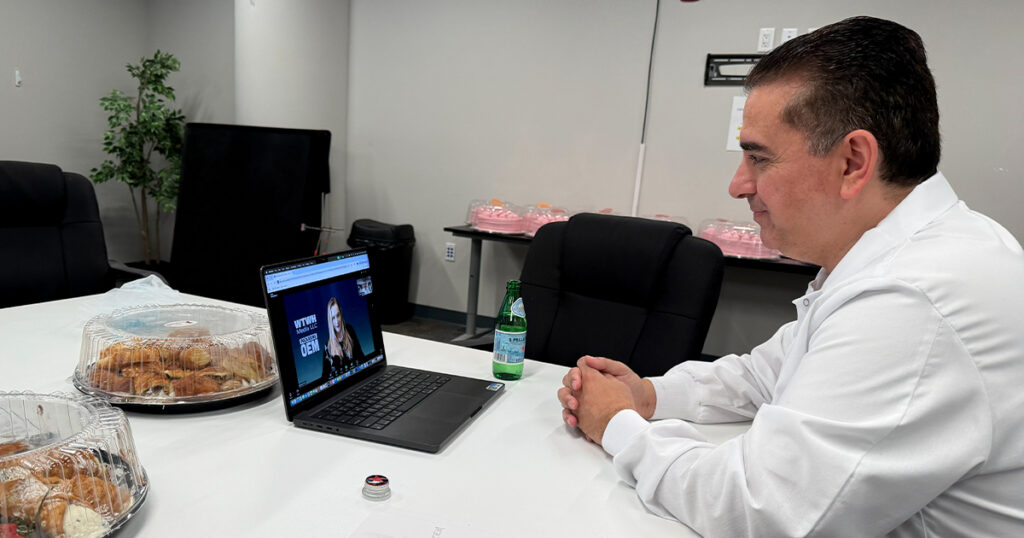
Valastro was fresh off the factory floor when he joined Packaging OEM for a video interview about the bakery’s packaging operations.
“We went from maybe doing, let’s say, 1,000 cakes a day…[to],40,000 to 80,000 cakes a day,” said Valastro. “And all those cakes have got to go in packaging.”
Cakes destined for retail shelves at Walmart and Sam’s Club, as well as food-service customers, must withstand handling and transportation before reaching consumers.
“I love equipment. I always walk the bakery and packaging expos. That’s how important packaging is for someone like me,” Valastro said. “It’s that safety net.”
For Valastro, finding the right equipment means balancing product protection with production demands and the needs of employees working on the line.
Finding the sweet spot between speed and simplicity
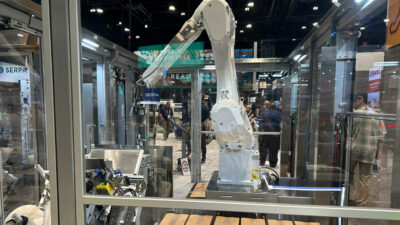
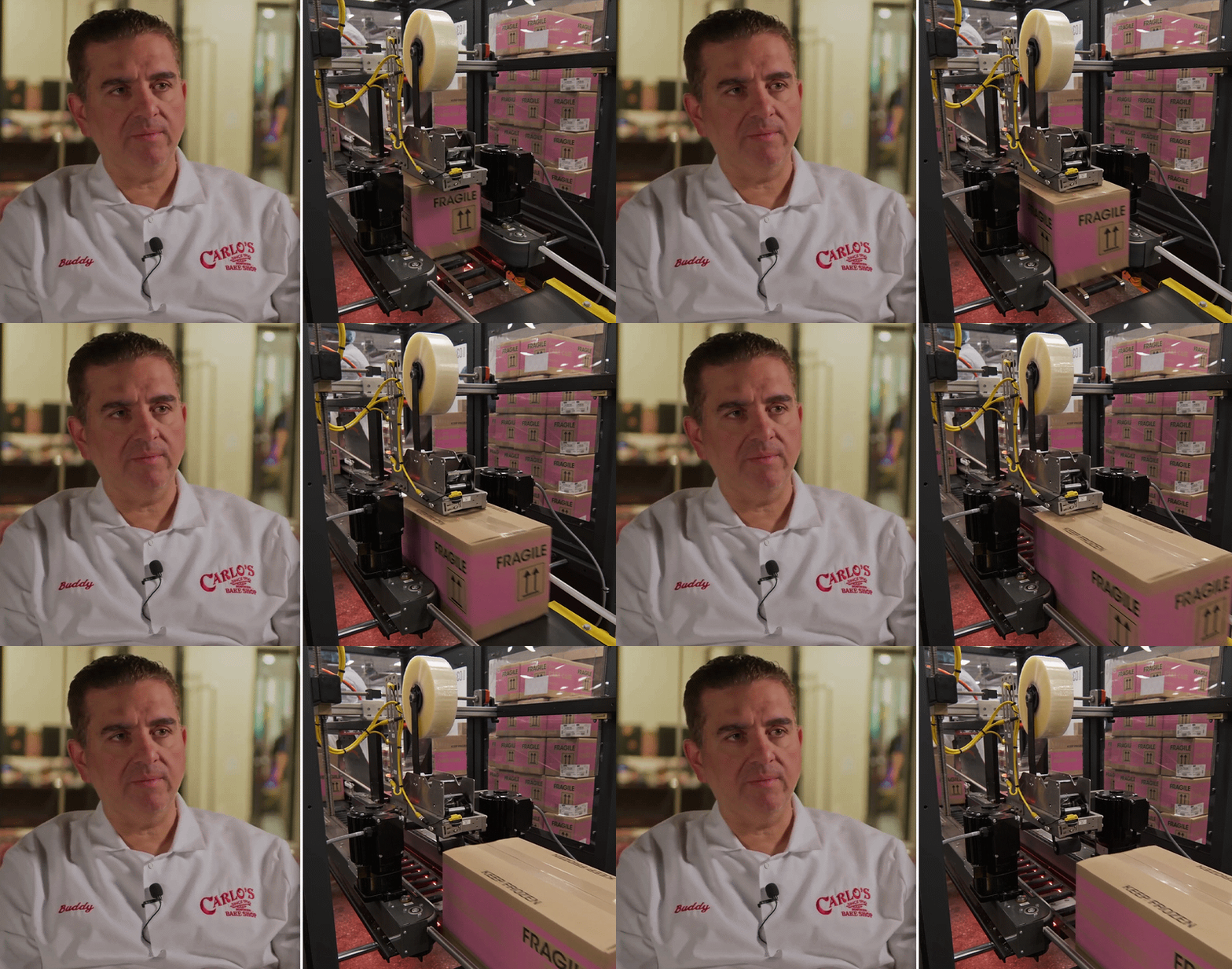
Valastro discovered Combi Packaging Systems’ ErgoPack semi-automatic case packer when he stopped by the company’s booth at PACK EXPO Las Vegas in 2025. Its ergonomic design caught his attention, particularly how operators could work without excessive bending or reaching.
“It was ergo-designed so it’s easier for your employees,” Valastro said.
Rather than evaluating machinery solely by watching it operate, Valastro said he performs various tasks along the production line to understand the employee experience throughout a shift.
“I always want my employees to be comfortable,” he said. “When we develop the lines, I go around and do the different jobs, because if they’re not comfortable, [if] they’re reaching too far, that’s when you have problems.”
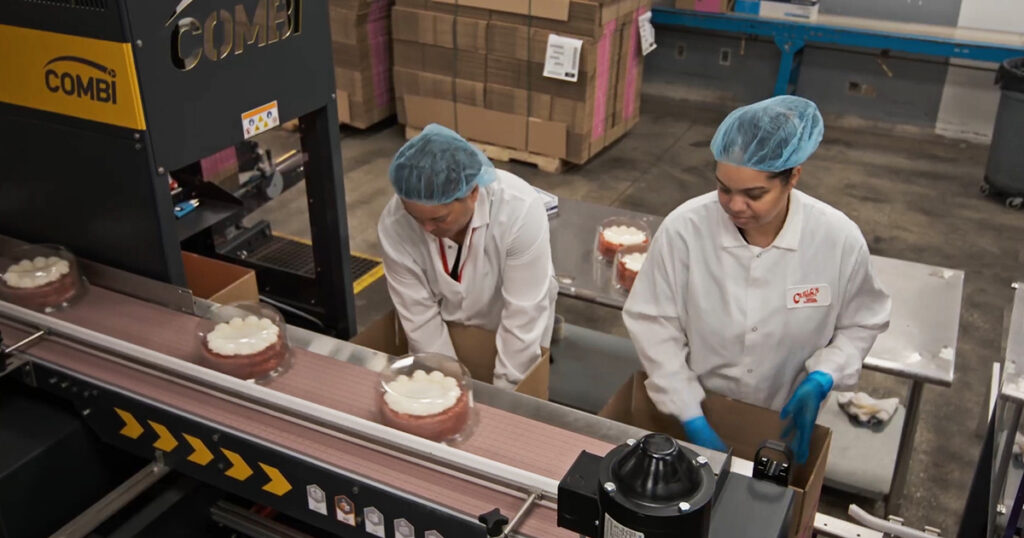
The ErgoPack also offered the speed needed to accommodate the bakery’s production requirements without sacrificing the mechanical simplicity Valastro prefers.
“I thought the machine was advanced enough, but simplistic enough,” he said.
Before the installation, Carlo’s Bakery used a two-conveyor arrangement that involved more manual handling, including lifting, bending, and reaching. The ErgoPack not only changed how employees handle cases during packing but also automated the manual process in a way that increases productivity.
“The machine doesn’t get tired. It doesn’t call out sick. It’s a repetitive job,” said Valastro. “If you have to make 20,000 boxes a day, it’s a lot of work, and you have to keep a pace. The machine just does what it’s going to do.”
When standard case packing doesn’t make the cut
Carlo’s Bakery uses multiple case sizes, including shorter cartons that fell outside Combi’s standard configure-to-order offering. Accommodating those formats required engineering adjustments to the ErgoPack.
Alex Untch, senior manager of engineering at Combi, explained that shorter cartons can present challenges during sealing. “Much like the meat industry that uses shorter cartons, the wide panel can flex and twist when it comes to tape, so there is a fine balance on the tensions,” said Untch.
Untch said that the equipment needed to hold each carton securely without applying too much pressure and compressing it. To find the right settings, the team tested the bakery’s different case formats. Valastro was closely involved in that process, sending boxes to Combi’s facility in Canton, Ohio, for evaluation.
“We talked through it a hundred different ways. We sent probably a truckload of boxes out to Ohio, and they worked for weeks dialing it in,” said Valastro.
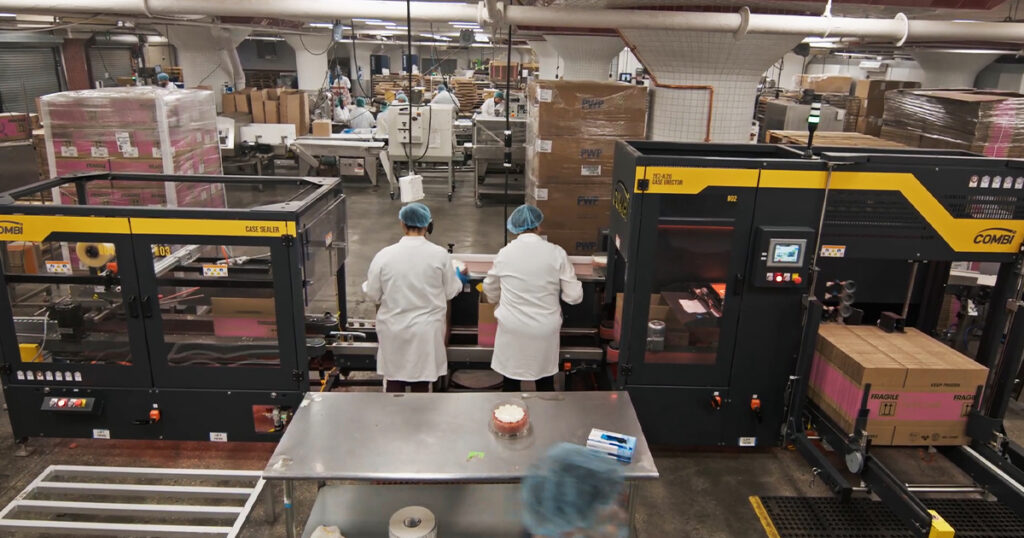
Using the cartons, Combi determined the adjustments needed for each format, including hardware modifications such as plates and software recipes with timer settings to accommodate changeovers between case sizes.
The OEM also designed the setup process to be straightforward for operators. Adjustment points are numbered, and on-screen recipes provide instructions for configuring the machine to run a particular carton.
“The on-screen recipes tell the operator exactly what to do so that results are consistent across shifts,” said Untch.
Valastro said Combi’s support made it easy for his team to learn how to use the equipment and get help with problems that came up.
“They really made it dummy-proof and easy for us,” he said. “And they stood behind the training. If I have a problem, I’ve got the cell phone number. I call.”
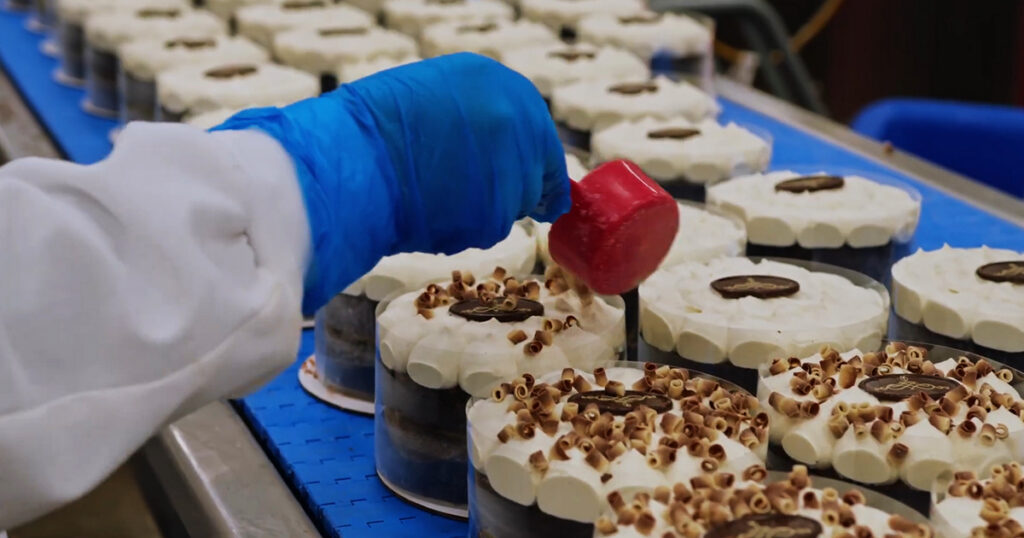
Carlo’s Bakery produces cakes ranging from five to 10 inches in diameter, along with other dessert formats. Valastro said the bakery produces approximately 40 cakes and 20 master cases per minute. Its cake-slice line runs at approximately 120 to 150 units per minute, while the cup line has a similar production capacity.
Valastro’s attention to packaging extends beyond case packing. Because the cakes are relatively lightweight, the bakery builds pallets reaching approximately 89 to 94 inches tall. He also discussed plans to upgrade the bakery’s stretch-wrapping equipment to improve load containment during transportation.
The mechanical mind behind the Cake Boss
Valastro’s years of creating intricate cakes, including some as big as life-size cars, also involved working with the equipment and mechanics needed to bring those creations to life.
“I just think that I really understand a lot of the equipment. And maybe, from doing so many years of Cake Boss, I became a lot more mechanically inclined,” he said.
That experience now influences his conversations with equipment manufacturers, including Combi.
“I’m on the phone with the engineers, and we’re going back and forth about ideas. You feel like a true partnership,” said Valastro.
His problem-solving approach also extends to packaging designs outside the Combi installation. Valastro developed a shipping box for a frozen two-tier cake, using a central support and secured cake board to help keep the product in place during transportation.
“I did engineer a box that I use for shipping a two-tier cake, and I took the box and I kind of like taped it myself and I made slits in it,” he said. “So basically, you could take this cake because we’re shipping it through, like, UPS. If it flips over, the cake stays perfect.”
For Valastro, solving engineering problems offers the same enjoyment as creating the showstopping cakes that made him a television star.
“And to be honest with you, I love to make content, and I love to film, but I love doing what I’m doing now,” he said. “People tell me I’m crazy because I’m here at five in the morning. There’s days that I sleep in my office, but there’s something about making this work that gives me the same satisfaction that if I make a giant cake that’s doing something.”
Whether he’s building a cake or refining a production line, Valastro wants to find a solution that works.
“I guess it’s a problem-solved thing for me in my mind,” said Valastro. “I want to solve the problem, and I want to make perfect things.”
At the time of the interview, Valastro was already discussing another production line with Combi.
“When I watch one of my lines work in my head, it’s like a symphony. It’s like a perfect melody, and it’s flowing, and my people are happy,” said Valastro. “We’re making beautiful cakes at high speeds, and everybody’s comfortable. And I’m a happy Cake Boss.”