American manufacturers aren’t waiting around to see what artificial intelligence (AI) can do for their operations. Many are already putting it to work, according to new data from Schneider Electric.
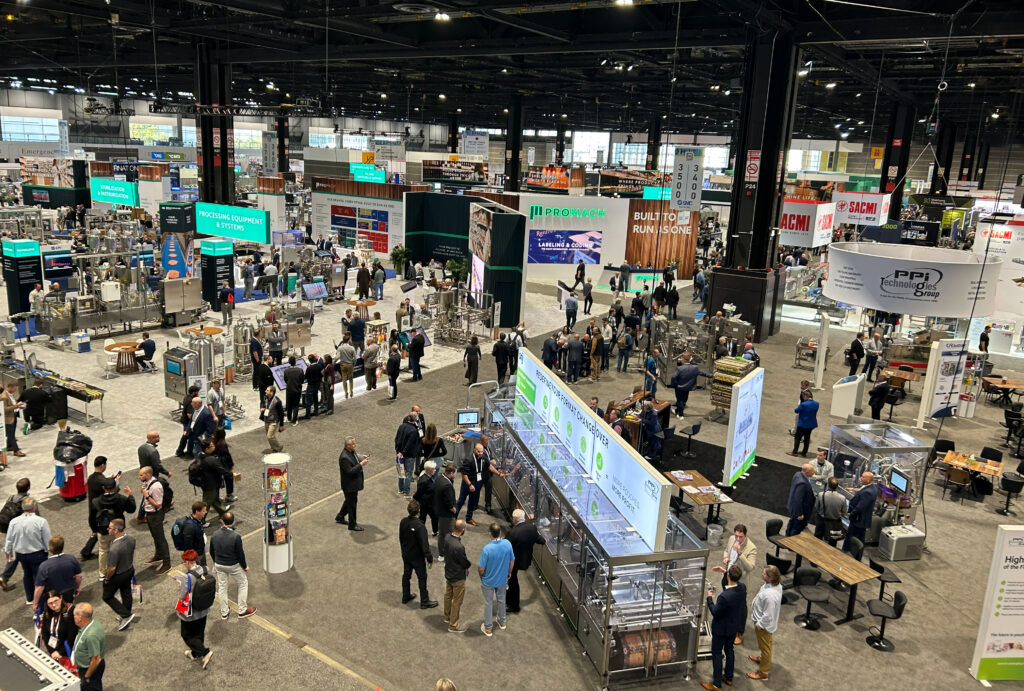
At PACK EXPO International 2026 in Chicago, Schneider Electric released research showing that 29% of U.S. consumer packaged goods (CPG) manufacturers have embedded AI into their core operations and decision-making, more than double the 13% reported worldwide. Another 52% have deployed AI across multiple sites or processes, compared with 27% globally.
That growing adoption creates opportunities for original equipment manufacturers (OEMs) to build machines that can adapt to different products, help operators troubleshoot problems, and use production data to improve performance.
Christine Bush, director of the robotic center of excellence at Schneider Electric, said she sees early technology adoption as a defining characteristic of American manufacturing.
“We tend to be early adopters in the U.S., and I think the rest of the world is a little bit more conservative to the approach of immediately pulling artificial intelligence since that’s the latest technology change in this industry,” said Bush. “I think we’re more agile to adopt these technologies early rather than wait and see and vet out all the pros and cons before jumping in.”
By 2030, 67% of U.S. CPG respondents expect AI to be central to their operations, compared with 37% globally, according to Schneider Electric’s data.
The company told Packaging OEM that it surveyed 1,453 executives and senior manufacturing decisionmakers worldwide, including 252 in the United States. Schneider Electric grouped food and beverage and life sciences manufacturers under the CPG category for the report.
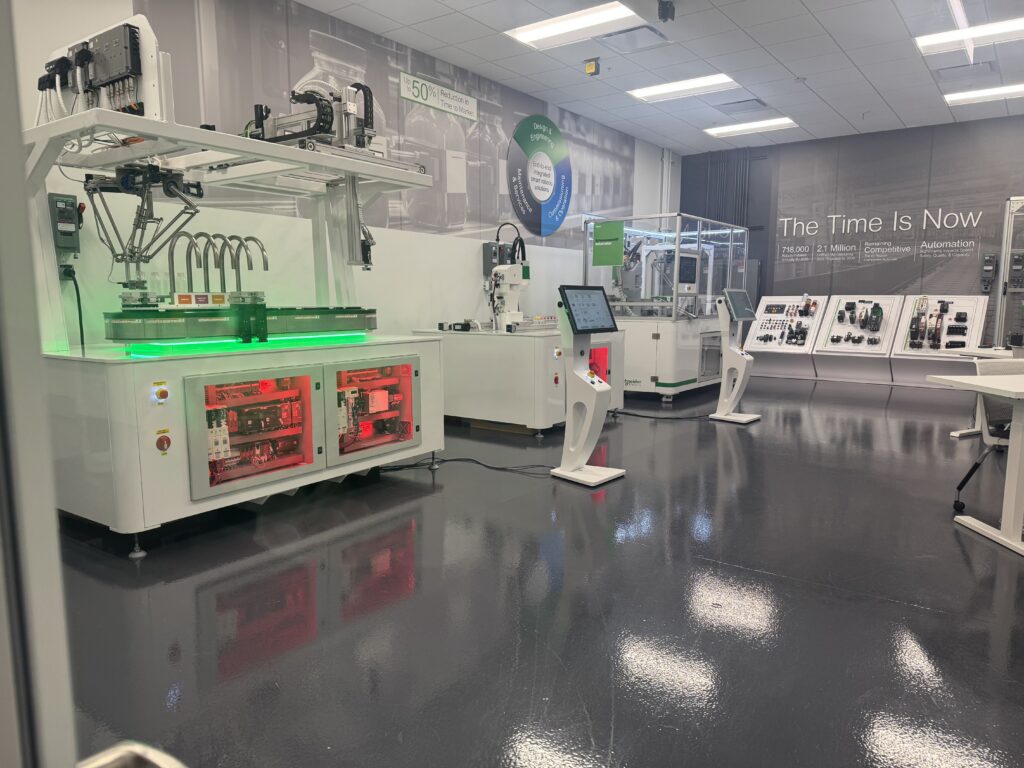
Making packaging machines more human-like
As manufacturers introduce more product variations, packaging machines must balance flexibility with speed and performance.
“I think they should be looking at how they can be making their machines more agile for their end users,” said Bush. “And end users have been asking for a long time for the equipment to be more agile, but there’s always the payoff of agility, performance, and then price point.”
SKUs and formats are rising, so machines must be able to pick up products of different sizes and shapes. Handling a rigid container is different from picking up a fragile product that could be damaged by too much pressure.
Bush explained that AI, vision systems, and sensors can help equipment recognize those differences and adjust how it handles each item, much like a human would.
“With artificial intelligence, we have to make the machine more human-like, which means we need to bring in vision. We need to bring in sensors that will be able to enable the machine to adapt to different sizes, but yet how fragile the product is to pick it up with less tension, so you don’t smash the product,” said Bush.
She said that vision systems are also becoming more practical for OEMs to integrate into their equipment.
“We work with partners that vision is all they do, and there are great advances with vision systems these days, and the price point is coming down,” said Bush. “This reality that OEMs can make their machine more human-like has never been better than it is today.”
Robotics is another part of the push toward automation, particularly as manufacturers look for ways to address workforce shortages and reduce risks to employees.
“In any role or function that’s dull or dirty or dangerous, we’re having a hard time finding employees to jump into those jobs,” said Bush. “They are prime for high levels of automation and robotics.”

Helping operators make decisions
The potential applications extend beyond robotics and product handling to the people operating packaging machinery.
“Artificial intelligence is helping them make decisions faster because there are always exceptions in the manufacturing process,” said Bush. “I think operators may be trained to deal with, let’s say, 60-70% of the flow of their machine or their line, but when those events come along, it’s how are they going to respond to them?”
The way operators interact with that technology could also change.
“I think voice will come, but I think as a longer-term output. I think early on artificial intelligence will be putting prompts on the screen with acknowledgement from the operator versus voice,” said Bush.
The need to keep equipment running also appears in Schneider Electric’s data. U.S. CPG respondents estimate that downtime, waste, delays, rework, and suboptimal asset use account for losses equivalent to 20% of potential manufacturing revenue, compared with 15% globally. They expect that figure to reach 34% by 2030.
Keeping equipment running also requires a different approach to maintenance.
“If you run it to failure, which should never be a phrase that we use anymore with the intelligence that we have today, you should be running to that maintenance scheduled event,” said Bush.
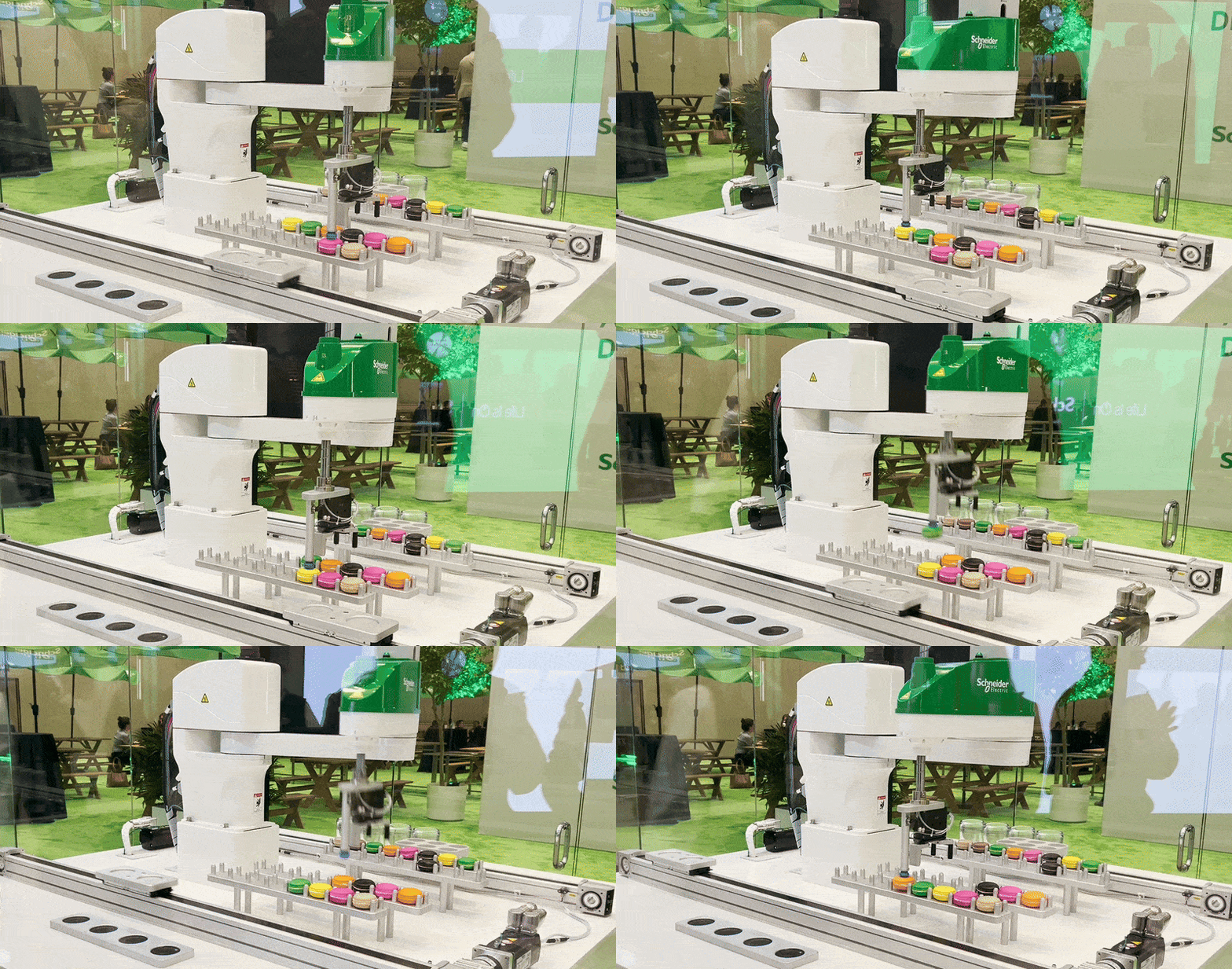
Beyond simulation: Digital twins and agentic AI
Bush also sees opportunities to combine digital twins with agentic AI, which can analyze information and propose actions.
“The game changer is still digital twins, but I’m going to pull in the agentic AI piece with the twin because we can’t stop at just the modeling with the digital twin piece from a simulation and emulation piece,” said Bush.
Beyond simulating equipment before it is built, Bush said a digital twin can provide a record of production activity that engineers can examine when something goes wrong.
“The twin is kind of like the DVR recording all of the processes on the line digitally, so that you can go back in time to say, okay, what exactly happened when there’s an event,” she said.
Agentic AI takes that information a step further. Rather than simply reviewing what happened, it could help identify opportunities to improve machine performance and generate proposed programming changes for human review.
“The agentic piece is constantly looking at those things and then prompting and creating the code to make those small changes on the line more efficient or the machine more efficient if you’re an OEM,” said Bush.