Counting 1,000 inventory items with a handheld barcode scanner is harder than it looks, even when the warehouse is virtual. Xemelgo, a provider of cloud-based software for tracking inventory and assets, recently launched the Xemelgo Experience Center.
It’s a browser-based game that lets users enter a virtual warehouse and compare barcode scanning with radio frequency identification (RFID) technology, which can be used to track assets, shipments, raw materials, and finished goods across manufacturing and supply chain operations.
The experience is designed to give manufacturers, distributors, retailers, and other companies a simplified way to compare the two technologies before investing in an RFID system.
The game was created by Michelle Arjona-Reyes, a rising junior at the University of Washington studying marketing and information systems. She developed the idea during her summer internship with Xemelgo.
“The whole game allows you to simulate RFID through a cool and unique experience,” said Arjona-Reyes.
Taking RFID for a test run
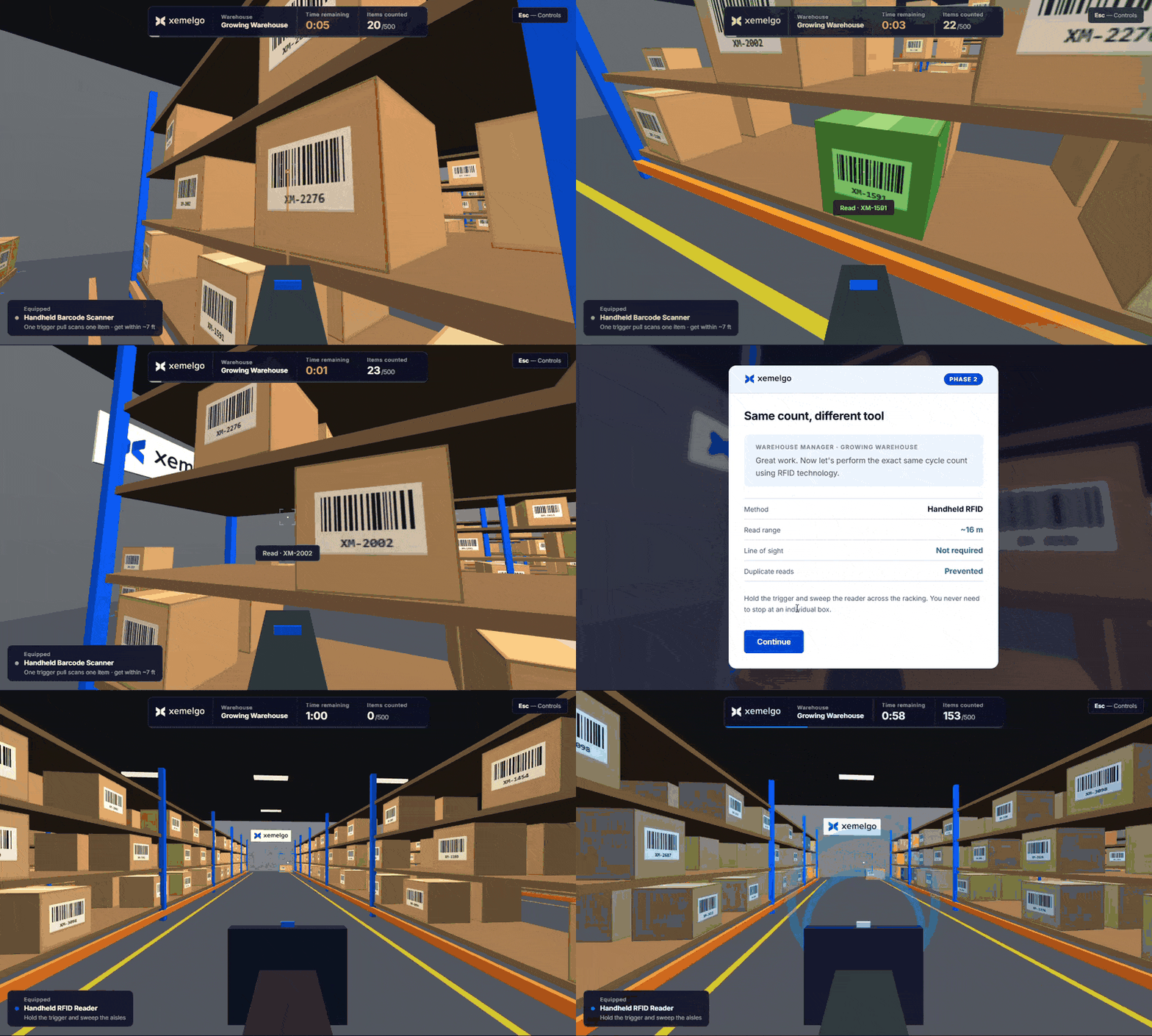
The game offers three warehouse sizes containing 100, 500, or 1,000 inventory items. Using a keyboard and mouse, players move through the warehouse to complete a timed cycle count, first with a barcode scanner and then with an RFID reader.
During the barcode round, players must get within a few feet of each item, aim directly at a visible barcode, and pull the scanner trigger. Each trigger pull reads one item.
The RFID round allows players to hold the trigger and read multiple tagged items at once without direct line of sight.
RELATED | Zebra Technologies expands packaging visibility with scan tunnel, RFID tools
After both rounds, the game compares the number of items counted, accuracy, estimated labor time, and the time required to complete a full inventory count.
“It’s another resource for Xemelgo to be able to teach their own customers, prospects, and partners about RFID,” said said Arjona-Reyes.
Players can also unlock achievements and download a card showing their results. The game includes an Easter egg that can help players move through the warehouse more quickly.
While gameplay lasts two minutes, Arjona-Reyes hopes it gets players thinking about where RFID could make a difference.
“I want you all to be curious about RFID,” she said. “How would this look in your day-to-day operations?”

Subscribe to the Packaging OEM newsletter
Get the latest news, trends, and technology updates delivered straight to your inbox and make smarter packaging decisions.
Gaming meets supply chain
Arjona-Reyes developed the game after Garrett Gross, senior director of growth at Xemelgo, encouraged her to create a project during her internship with the company.
While researching ideas, she came across the term “virtual demo.” That led her to think about combining her interest in video games with a tool that could help Xemelgo explain RFID.
“I’ve always wanted to create a game,” Arjona-Reyes said. “Gaming has been a big part of my life, so how can I use that creativity to translate it to Xemelgo and their unique product and software, and then use it as a marketing tool?”

She built the game herself with feedback from Xemelgo’s team. The initial prototypes did not use a first-person format, so she continued refining the design, navigation, and controls. Overall, she said it took a little over a month to complete.
“I wanted the game to be for anyone who has played with RFID or used RFID, and people who haven’t,” said Arjona-Reyes.
She believes the interactive format can make RFID easier to understand, particularly for students and others who may not be familiar with the technology.
“When we’re consuming media or content, we want it to be quick or engaging. Videos are great, reading is great, but I think having a game is just a whole different perspective,” she said. “It’s a different way to learn about it.”
The warehouse is the first experience available through the platform, and Arjona-Reyes said she already has ideas for additional games.
“I’d love to make more,” she said. “We’ll just have to see how that goes.”