Offshore manufacturing began to take shape in the 1970s but really took off in the 1990s as global supply chain logistics made it possible for OEMs and component companies to set up shop in another country, where labor costs were much lower than in the United States.
But after the COVID-19 pandemic exposed supply chain vulnerabilities, manufacturers found more value in having control over the supply chain than in lower labor costs. As a result, OEMs began shifting production back to the U.S. to have more control over the supply chain while also bringing jobs and innovation to American soil.
For packaging OEMs, reshoring often takes shape one decision at a time. The path may involve bringing a machine’s production to the U.S., replicating an established operating model closer to customers, or continuing a domestic manufacturing and sourcing strategy that has been in place for decades.
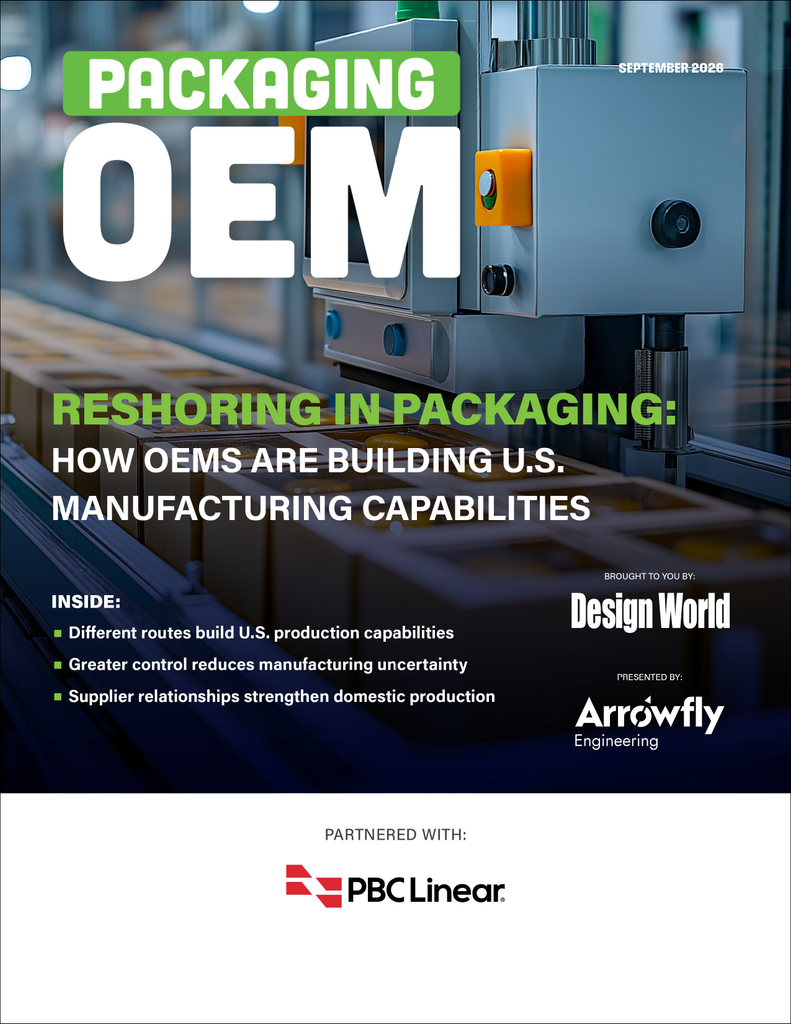
This Packaging OEM special report examines the factors shaping reshoring decisions, including:
- Different routes to building U.S. production capabilities
- Greater control over manufacturing and the supply chain
- The role supplier relationships play in domestic production
- How tariffs, automation, workforce challenges, and access to capital shape reshoring decisions
Complete the form below to download this Packaging OEM special report.
Sponsored By:

"*" indicates required fields
By clicking 'Submit' above and registering for this content, I acknowledge and agree to Arrowfly's Terms and Conditions and to Arrowfly's use of my contact information to communicate with me about offerings by Arrowfly, its brands, affiliates and/or third-party partners, consistent with Arrowfly's Privacy Policy. In addition, I understand that my personal information may be shared with any sponsor(s) of the content, and that they may contact me directly about their products or services. Please refer to the privacy policies of such sponsor(s) for more details on how your information will be used by them.