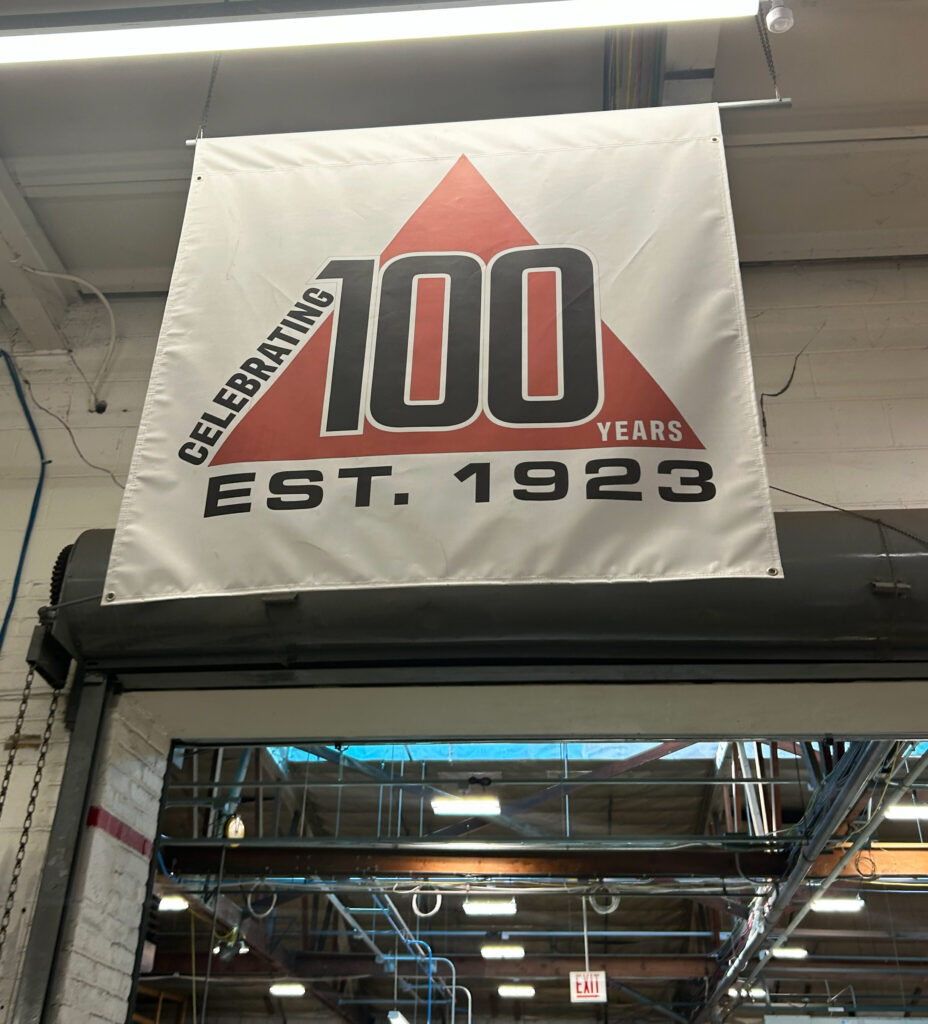
Triangle Package Machinery understands the value of doing more with less.
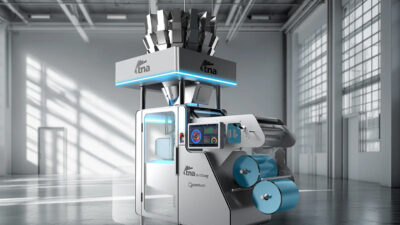
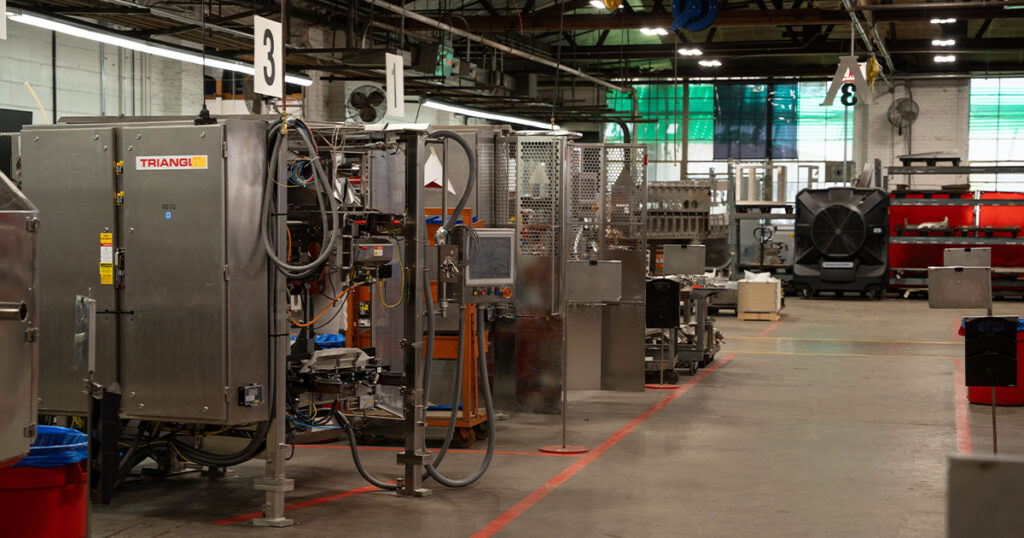
The 103-year-old family-owned OEM has operated from its current facility in Chicago since 1955. Here, it builds its packaging machines, including vertical form-fill-seal (VFFS) baggers, multihead weighers, bag-in-box cartoners, and premade pouch fillers.
Over the years, as the business grew, Triangle purchased adjoining buildings to expand its production floor. The operation now spans 125,000 square feet and employs about 80 people. But there’s little room left to physically expand, so growth must come from using the existing footprint as efficiently as possible.
Triangle gave Packaging OEM a tour of its facility to provide a small glimpse into how this OEM has resourcefully—and successfully—survived the test of time.
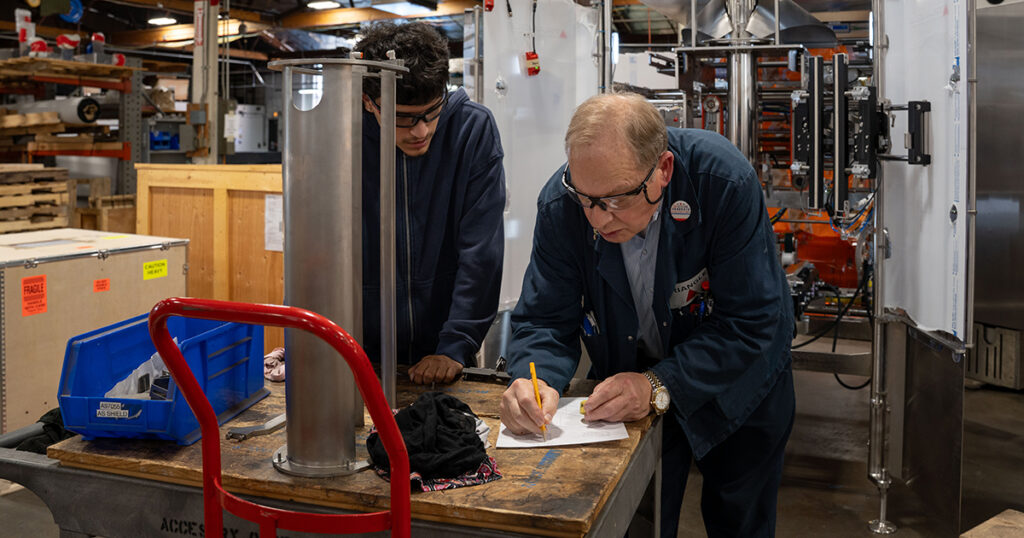
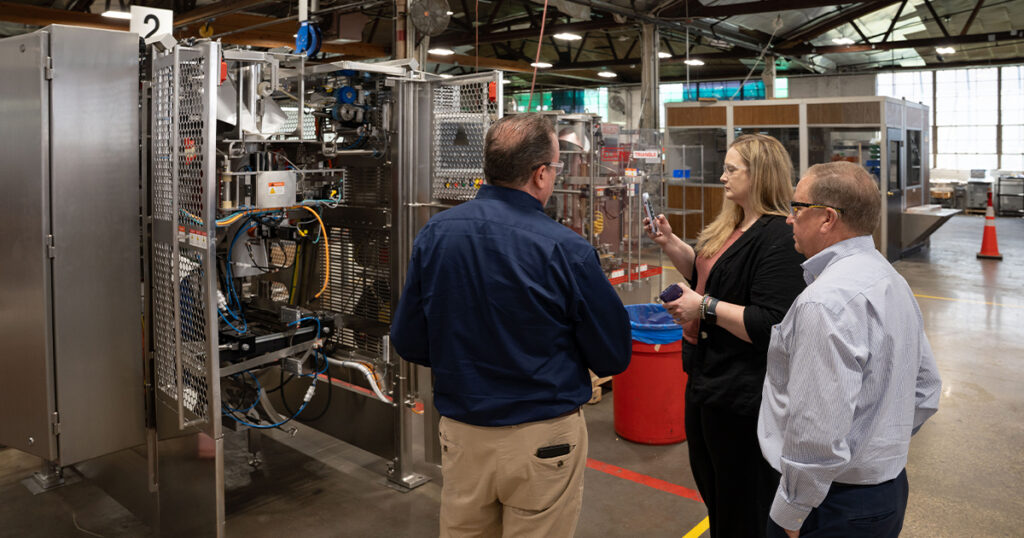
For example, Triangle is in the process of installing handheld and robotic laser welding systems in an area that once held two manual welding stations. Nearby, several small subassembly areas are being transformed into four standardized workstations. The goal? To help employees build quality machines faster.
“We’re creating space where there was none,” said Triangle CEO Bryan Muskat during the tour. “Every square foot counts.”
The changes underway in Chicago connect Triangle’s past to its future. New manufacturing technology is creating capacity on the shop floor, application-driven engineering is helping customers do more within their own plants, and the company is preparing its next generation of leaders to carry more than a century of knowledge forward.
From the pantry to packaging equipment
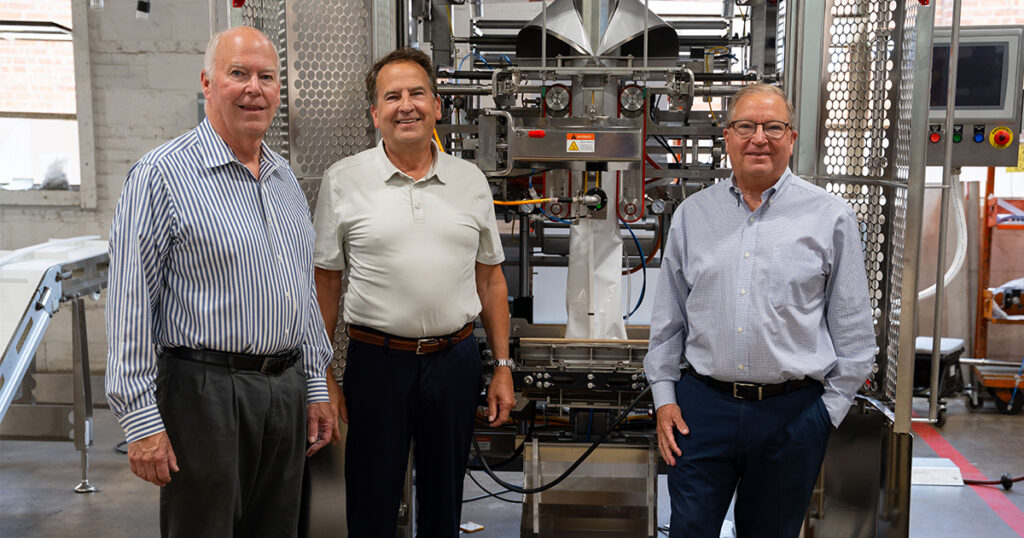
Triangle’s origins date back to 1923, when Louis R. “L.R.” Muskat, Bryan Muskat’s grandfather, founded the business and began producing pancake and biscuit mixes. As demand grew, L.R. supplied the mixes through a local distributor.
When those same grocers wanted to package the products themselves, L.R. began building simple carton sealers and bulk weighers for them. That shift moved Triangle from producing food products to building packaging machinery, developing its first system in 1926.
Triangle’s equipment changed as new products and markets emerged. The company expanded from carton sealers and cold glue into filling, weighing, bagging, meat wrapping, and other applications.
“Whatever new industry was coming up, it was always, ‘How do you package it?’ That’s what we were focused on,” said Muskat. “Whatever new market segment popped up, how do you make a machine for it? That’s how our legacy has grown.”
A turning point in the early 1970s reshaped Triangle’s business. By then, L.R.’s son Robert Muskat, Bryan’s father, was leading the company.
At that time, Triangle was working with another machine builder, Mettler Toledo, on meat-wrapping equipment. During a family ski trip in Snowmass, Colorado, Robert received a call. Mettler Toledo wanted to buy Triangle or end the partnership.
Robert went skiing, considered his options, and called Triangle’s director of engineering with his answer. “We’re not for sale.”
With one call, Triangle lost more than half its business. The company responded by concentrating on its bagging machines and net-weight scales, helping establish two of its core product lines.
Building more within the same walls
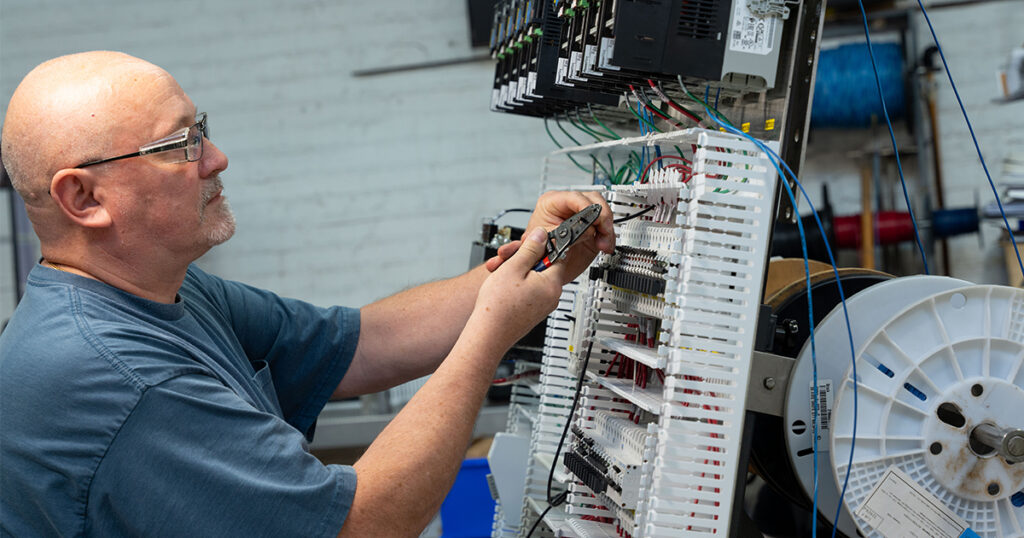
Triangle keeps much of its machine-building process under one roof, including machining, sheet-metal work, control panel assembly, programming, fabrication, and testing. Having those teams close allows engineers to work directly with the employees making the parts when a design or process needs to be adjusted.
“Everybody’s here,” said Muskat, highlighting the shop floor stockroom. “You’re not importing a part from a manufacturing house and finding holes in the wrong spot. Everything’s right here.”
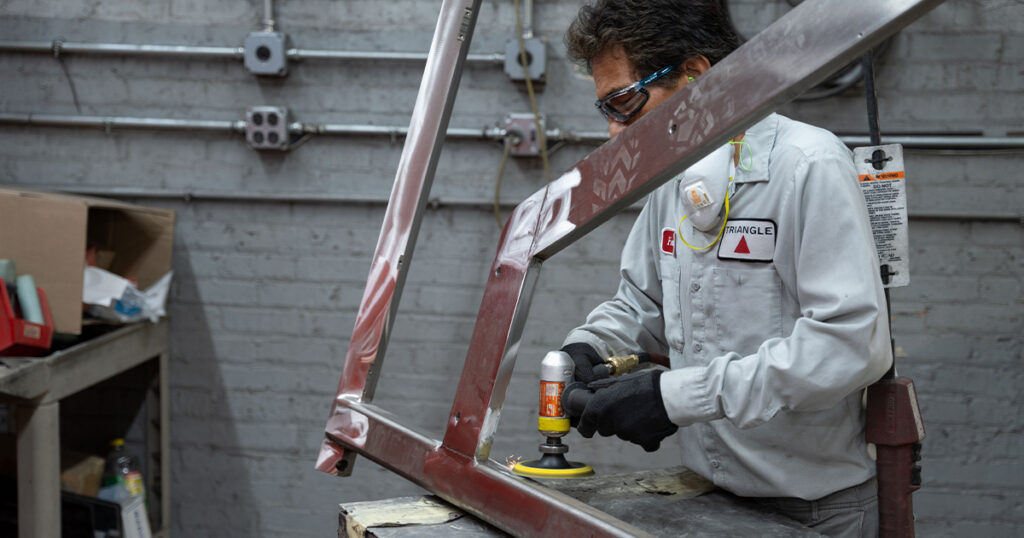
The handheld and robotic laser welding systems represent an investment of between $400,000 and $500,000. Muskat expects them to pay for themselves in less than 18 months by increasing capacity and reducing post-weld finishing work.
John Cooke, director of sales at Triangle, said the investment is part of Triangle’s ongoing effort to improve how it builds machines.
“We’re always refining it. Always looking to try to do it better, quicker, faster,” said Cooke.
Triangle’s research and development team is also using additive manufacturing to create 3D-printed prototypes and scaled-down assemblies. With the technology, engineers can print transition spouts and test how products move through them before manufacturing the final components.
“Now, we just 3D print the parts for testing on the machine before we manufacture production versions,” said Muskat.
Designed for the product and the plant
Kyle Wilson, Triangle’s director of engineering, said his team is often asked to make a complicated packaging process feel simple. That can mean controlling several ingredients, handling a fragile product, reducing changeover time, or fitting more production into a limited footprint.
Food applications accounts for most of Triangle’s business, with machines packaging cereal, produce, poultry, cheese, seafood, and frozen meals. Real estate is just as important to many of those customers. Much like a product competing for space on a store shelf, packaging machines must make the most of their footprint on plant floors. Manufacturers want more output, but they do not always have room to expand.
Wilson said that those constraints are part of what makes simplicity so important in equipment design.
“I like to keep it simple. I think that, to me, it’s true elegant design when you can do something that seems very complicated and make it much simpler,” he said
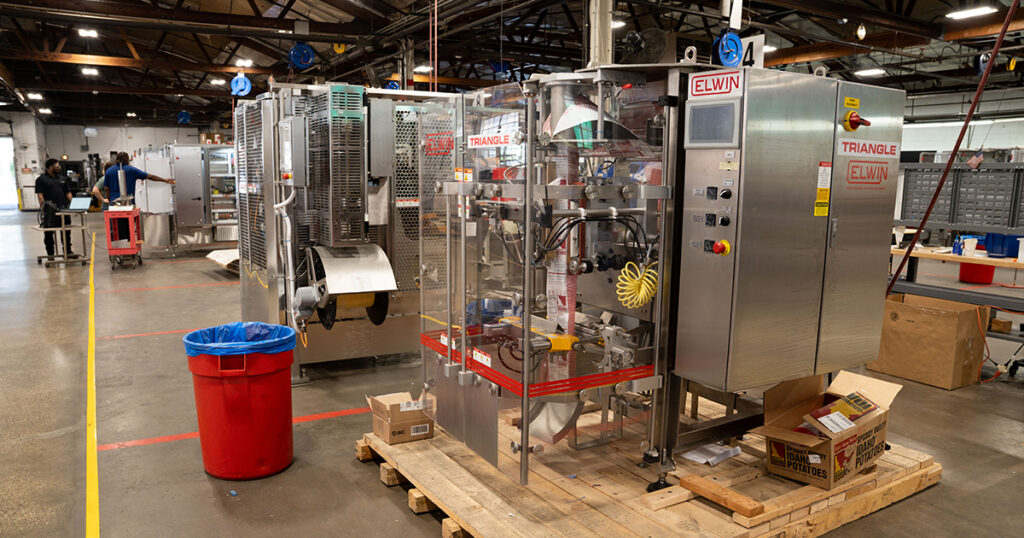
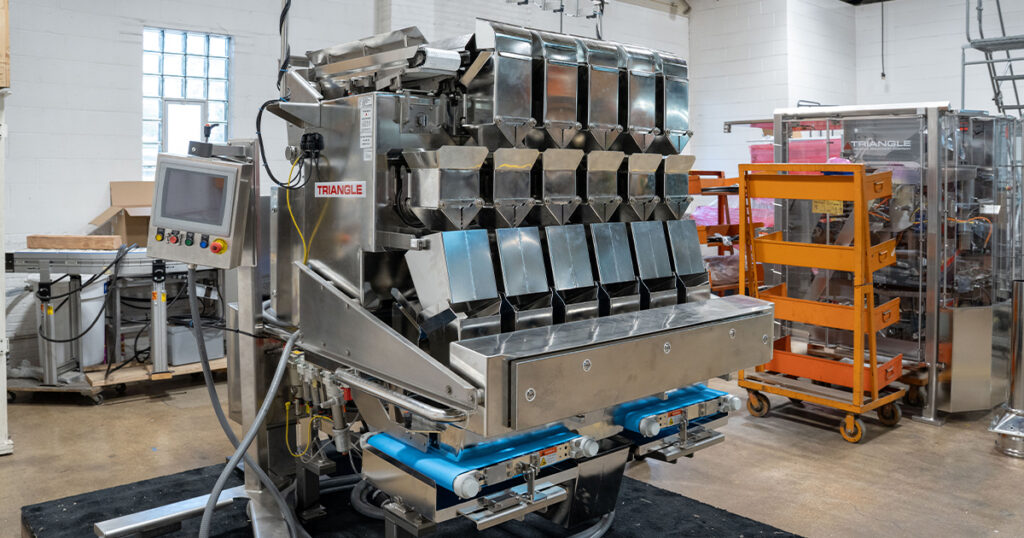
The solutions vary by application. For frozen meals kits sold at retailers nationwide, Triangle developed a system with six scales to weigh individual ingredients before combining them into two bags.
A co-packer’s request for faster carton and graphic changes helped lead to Triangle’s Generation Three Flex Cartoner. The system reduced a changeover that once took as long as eight hours down to about five minutes.
“It takes longer to take the cartons out of the magazine than to change the machine,” said Cooke.
The cartoner uses belts to drive flexible packages into cartons, allowing it to handle bulky or fragile products such as frozen fish, pierogies, and clam strips.
Floor space presents another challenge. Two Delta Compact VFFS baggers can fit in about the same footprint as one standard bagger, allowing produce facilities to alternate between machines beneath one scale. The system was developed for high-sanitation produce applications, but Triangle has since seen it used with other products, including cereal.
“Originally, we had an idea of where this was going to fit, and it fit that niche of the market,” said Triangle product line manager Brianna Wagner. “But we’ve seen it perform well in other places as well.”
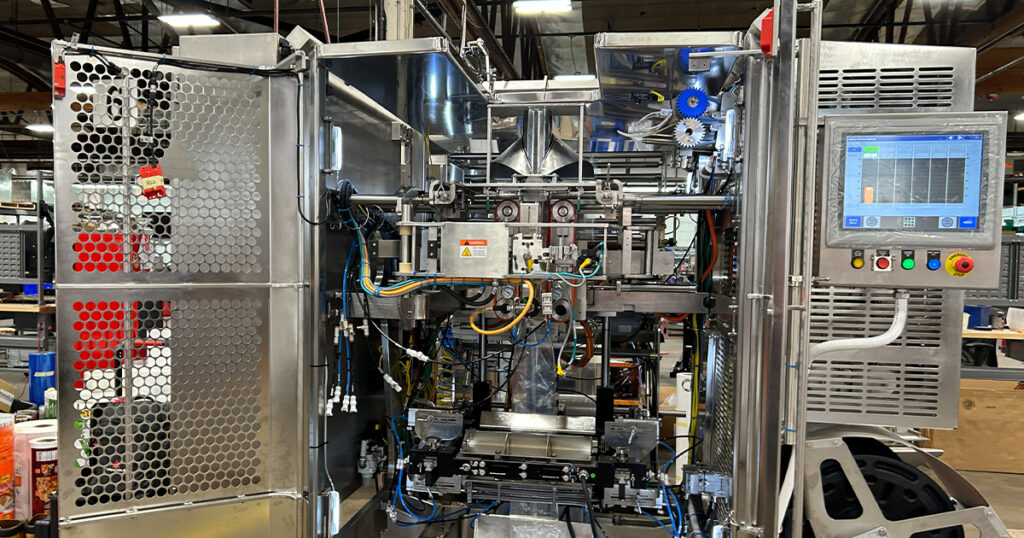
Sanitation also requires Triangle to consider how product moves through a machine, where food could collect, and whether employees can reach those areas during cleaning.
“It’s not just material selection. It’s not just meeting a certain weld inside radius that you have to meet,” said Wilson.
The Delta platform, for example, uses round bar stock instead of hollow tubing, reducing places where food and bacteria can collect. Triangle welds mounting points onto the frame instead of drilling into it, and components can be moved or removed for cleaning. Its VFFS machines can also be built to meet 3-A Sanitary Standard 27-08.
“People expect Triangle to be a high-sanitary machine. We’re the only bagger that’s 3-A certified,” said Cooke. “We build to the highest known standard.”
For products that can interfere with a traditional heat seal, Triangle offers ultrasonic sealing. The technology began with produce applications, where it could seal through lettuce leaves, and is now used for products including shredded cheese and liquids.
The variety of equipment moving through Triangle’s shop floor also gives the company a window into changing consumer demand.
“We can see shifts in consumer sentiment and in the economy based upon what starts coming through our plant,” said Cooke. “We start seeing pasta machines, everybody is a little anxious about the economy and saving some money and eating pasta. We start seeing shrimp machines come through our plant, we know that things are good.”
Customer feedback shapes what comes next
Ideas for new products and upgrades come through Triangle’s sales, service, sales engineering, and aftermarket teams. The company reviews that feedback every six months and looks for requests appearing across multiple channels.
“Not every idea that comes through that channel is going to turn into product development,” said Wagner. “But when you see the same thing coming up between service, sales, and different channels, we like to take that into account.”
Current projects include an electromechanical Y-axis drivetrain designed to simplify the system that moves a bagger’s sealing jaws. Triangle is also developing a web-based human-machine interface (HMI) using an industrial PC from Beckhoff Automation. Planned for early 2027, it will add onboard computing and allow authorized users to view the interface from the machine, a computer, or a phone.
“It seems like we’re headed to a very data-driven future,” said Wilson, discussing the HMI change. “It opens up the door for what we can do with all this data that we’re intending to collect in the future.”
Built to keep running
Triangle’s support continues long after a machine leaves Chicago. Cooke said a machine installed in Virginia in 1958 remains in production, while other equipment has operated in customer plants for 30 or 40 years.
“The family won’t obsolete things. They’ll still service them,” said Cooke. “Sometimes we have to pour a casting for a part that’s 60 years old.”
About 90% of parts orders ship the same day, and Triangle will manufacture replacements for older equipment when needed. Phone support is the first step when a customer needs help, but Triangle can also connect remotely to a machine. Cooke estimates about 85% of service calls can be resolved online.
For customers that do not want Triangle accessing their plant network, the company developed a remote support offering called Wilma. It creates a direct connection to the machine without touching the wider network.
“It’s a complete remote Wi-Fi hotspot, so we don’t have to touch their network. It’s been a lifesaver for our customers and for us,” said Muskat.
Generational knowledge
Triangle’s history also lives in its workforce. Some employees have spent 20, 30, or more than 40 years with the company. Parents, children, siblings, and other relatives work across its departments. While Triangle may be owned by the Muskat family, its definition of family extends across the operation.
That experience provides younger employees with an avenue for learning, but it also creates urgency as long-time workers approach retirement.
“One of the things that we’re thinking about a lot as a leadership team is how do we structure what we’re doing so that as we’re learning those lessons on the project, they’re not just going into the project and going out the door?” said Wilson. “We retain that information, and it’s accessible to the next generation.”
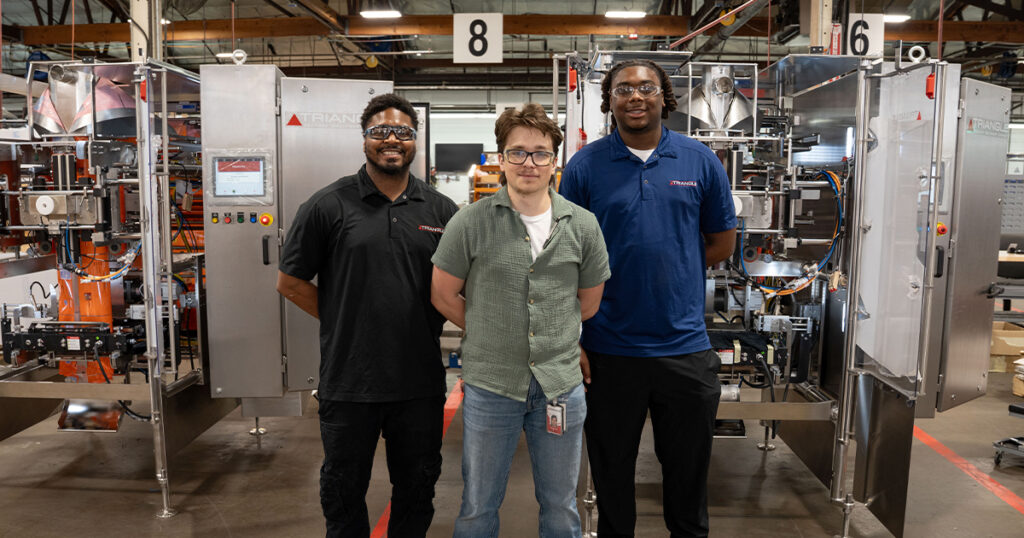
Triangle is working to document lessons learned during projects and adjust training for employees accustomed to digital and short-form information. It also recruits through technical schools and supports programs focused on mechatronics and food-packaging machinery.
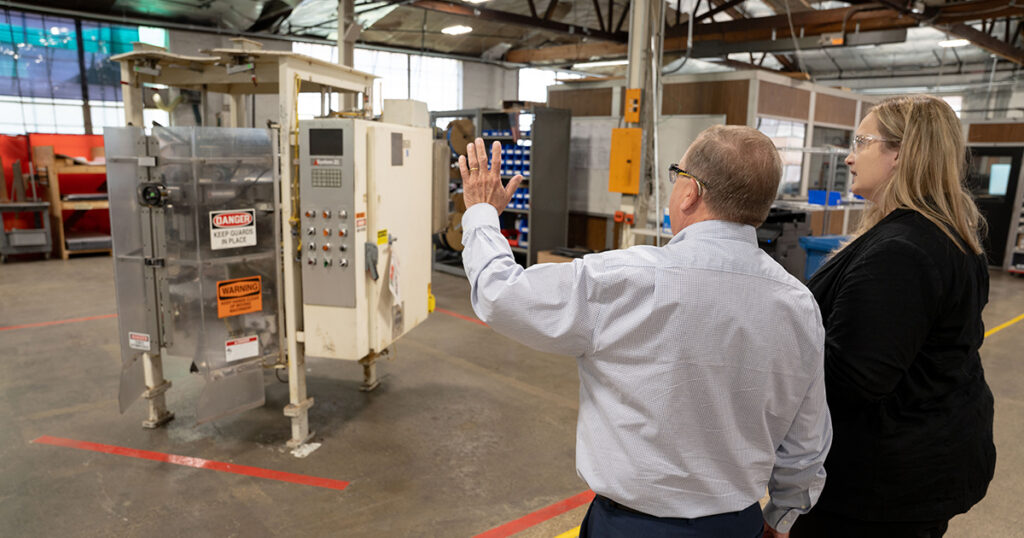
Even equipment that has reached the end of its lifecycle represents a learning opportunity. A Triangle machine built in 1986 recently returned to Chicago after about 40 years in production. The company plans to clean it, power it up, and use it to train new service technicians.
The next 100 years
Now, after over a century, the fourth generation of the Muskat family has entered the business. Bryan Muskat’s daughter and two of his brothers’ children work in aftermarket and project management.
While people and products change, the Triangle mission is the same.
Muskat expects Triangle to remain independent while continuing to seek new markets and products. The building may have little space left to give, but Triangle is still making room for new ideas.
“What is that next product that we need to bring to the market?” Muskat muses.