As packaging lines produce more formats, warehouses are moving more products than ever before. Artificial intelligence (AI) is taking on a larger role in decision-making across material handling operations.
From pallet inspection and robotic picking to overall orchestration, AI is enabling companies to process information faster and respond quickly to changing conditions. The challenge is no longer collecting data – it’s turning that information into faster decisions on the floor.
To support that shift, organizations are increasingly moving computing power closer to where the work happens through edge computing, rather than relying exclusively on cloud systems.
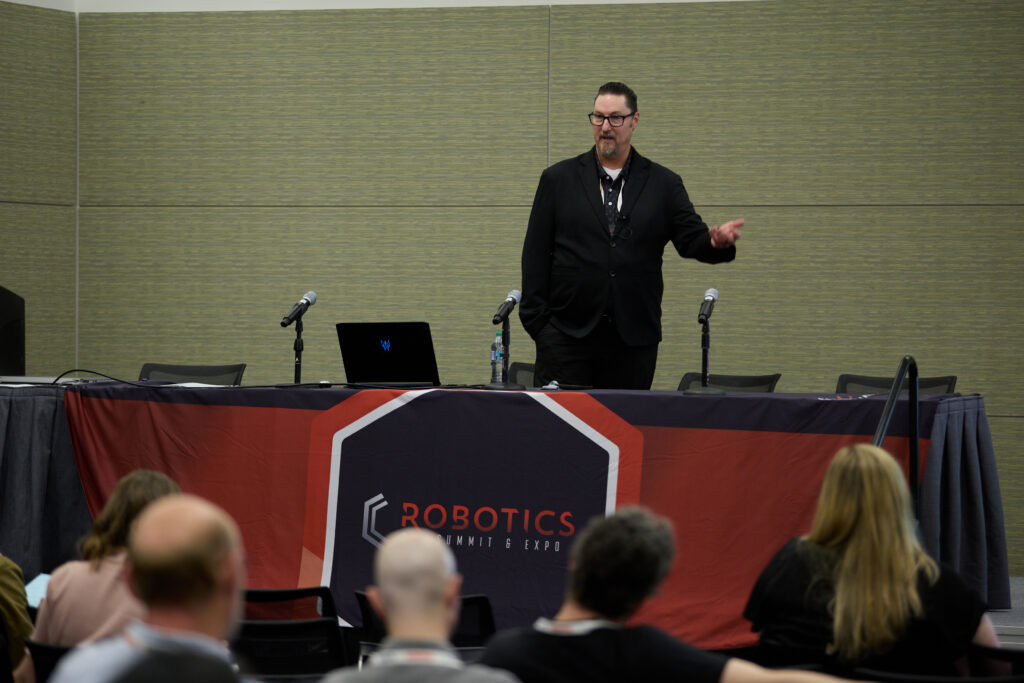
During a session at the Robotics Summit & Expo last month, Chris Morgan, senior director of R&D at Toyota Automated Logistics, discussed how edge computing is enabling AI to help warehouses move toward more responsive operations.
“AI in the warehouse is basically the bridge from automation to autonomy,” said Morgan. “It gives us all a competitive advantage.”
Detecting issues before they become disruptions
Vision inspection is one of the most practical AI applications in the warehouse and can be used to spot damaged pallets long before they create safety concerns or operational disruptions.
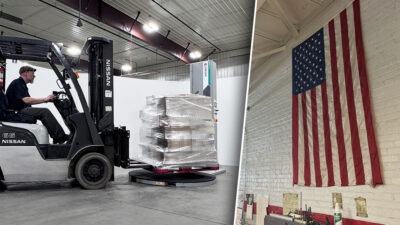
Drawing on a real-world example, Morgan shared a story from a facility housing palletized consumer health products. When operators attempted to move a pallet of Listerine 32 feet in the air, it collapsed, sending products crashing to the floor just feet away from workers.
“The whole pallet came down, crashing right in front of us, and we were maybe 20-30 feet away. We did smell like Listerine that day, and it was definitely a proven case of why AI matters,” said Morgan.
He then explained how AI vision could have prevented the situation. “If AI had seen that broken pallet, it would have inspected the fact that it was leaning previously,” said Morgan. “We would have never brought it down that way.”
RELATED | The year of the pallet: from uniform loads to mixed-SKU, real-time builds
While physical failures like this are easy to spot, he said other risks stem from gaps in operational visibility and tracking.
Sharing an example from an FDA-regulated pharmaceutical warehouse, Morgan said a pallet of high-value drugs went “missing” for several hours after a worker set it down, went to lunch, and forgot about it. The incident triggered a compliance scare, which could have been avoided with better tracking and automated checks on pallet and location status.
“This is how serious these things are,” he said. “These are the kind of things that can prevent stuff like this from happening.”
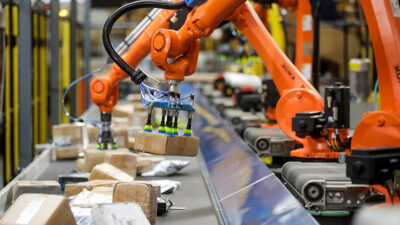
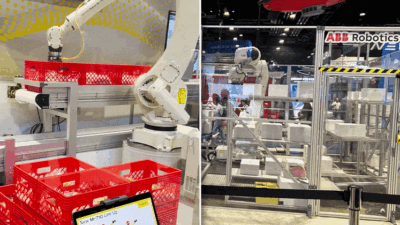
In addition to physical and compliance risks, Morgan added that AI can also be used for robotic picking, palletizing, and depalletizing applications.
Training AI before deployment
AI’s effectiveness often comes down to the data behind it. Harnessing that information and training systems before deployment can influence both business outcomes and operational performance.
“Data is the long-term competitive money,” said Morgan. “The biggest key enabler for your company is overall data.”
Synthetic data sets can be used to teach systems long before they are integrated into live operations, Morgan explained. “Synthetic data is something that you can brew from anywhere. You can design your own and leverage it,” he said.
Digital twins and simulation environments are helping companies apply that data to train systems before they are deployed in live operations. Morgan said that depending on complexity and available compute power, training cycles range from 24-48 hours for generalized product picking to a week or two for more complex warehouse simulations
RESEARCH | Smarter Packaging Operations With AI
He encouraged attendees to use digital models of their operations to better understand system performance and generate data for AI development. The goal is not simply to collect more information, but to build diverse data sets that help systems perform reliably across various environments.
“Diverse data sets enable AI and systems to generalize better, perform reliably across environments,” said Morgan. “You need to be bringing it in daily, more and more data. The more you can gather, the more you can feed your system.”

From the cloud to the edge
With a traditional cloud setup, data from connected equipment must leave the building to be processed on remote services. This adds delays, increases data transfer expenses, and raises cybersecurity concerns.
“Cloud AI causes latency, bandwidth, and privacy issues,” said Morgan. “Real-world systems need instant, reliable decisions.”
In warehouse operations, not every decision can wait for a round trip to the cloud.
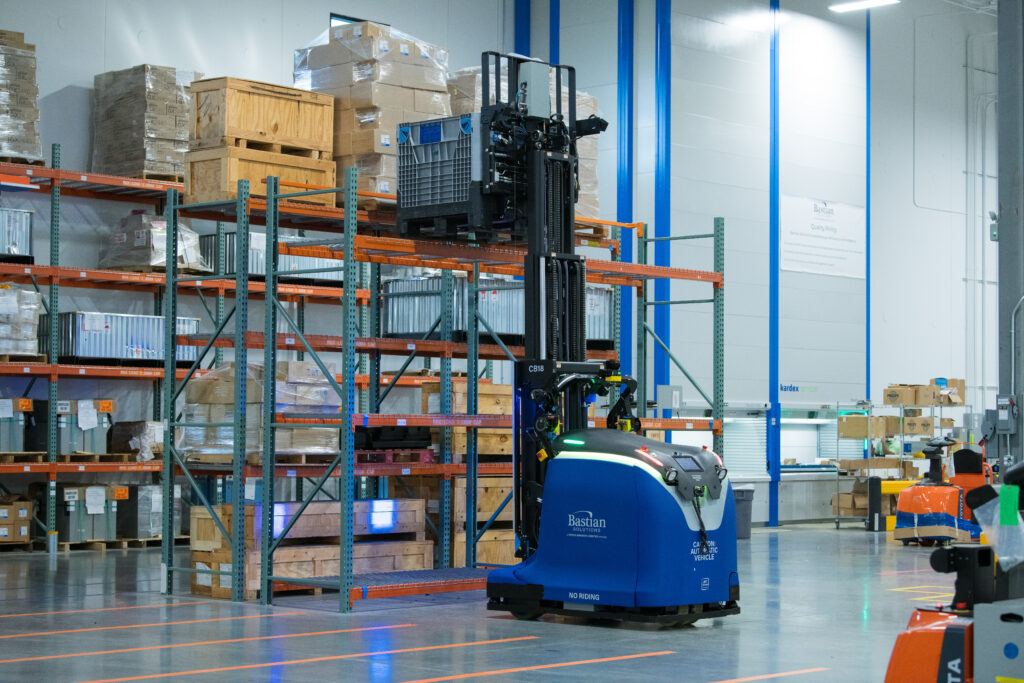
This need for live information is driving more organizations to move processing power closer to operations, with computing shifting onto robots, sensors, and other edge devices. Advances in sensors, computing power, and robotics are making that approach more practical. Ultimately, this reduces reliance on the cloud for time-sensitive decisions.
And while AI continues to advance, Morgan emphasized that people remain a critical part of the process.
“Human input is still the most successful and most important attribute to this entire pipeline,” said Morgan.

Subscribe to the Packaging OEM newsletter
Get the latest news, trends, and technology updates delivered straight to your inbox and make smarter packaging decisions.