Packaging machinery is designed around repeatable motion, but what moves through a production line is not always as predictable.
Products can shift before a robot reaches them, cases may arrive in an unexpected sequence, and conditions inside a machine can change while production continues. Engineers have traditionally accounted for those variables through programming, controls, product positioning, and other equipment around the process.
Increasingly, artificial intelligence is changing how much must be known or controlled ahead of time.
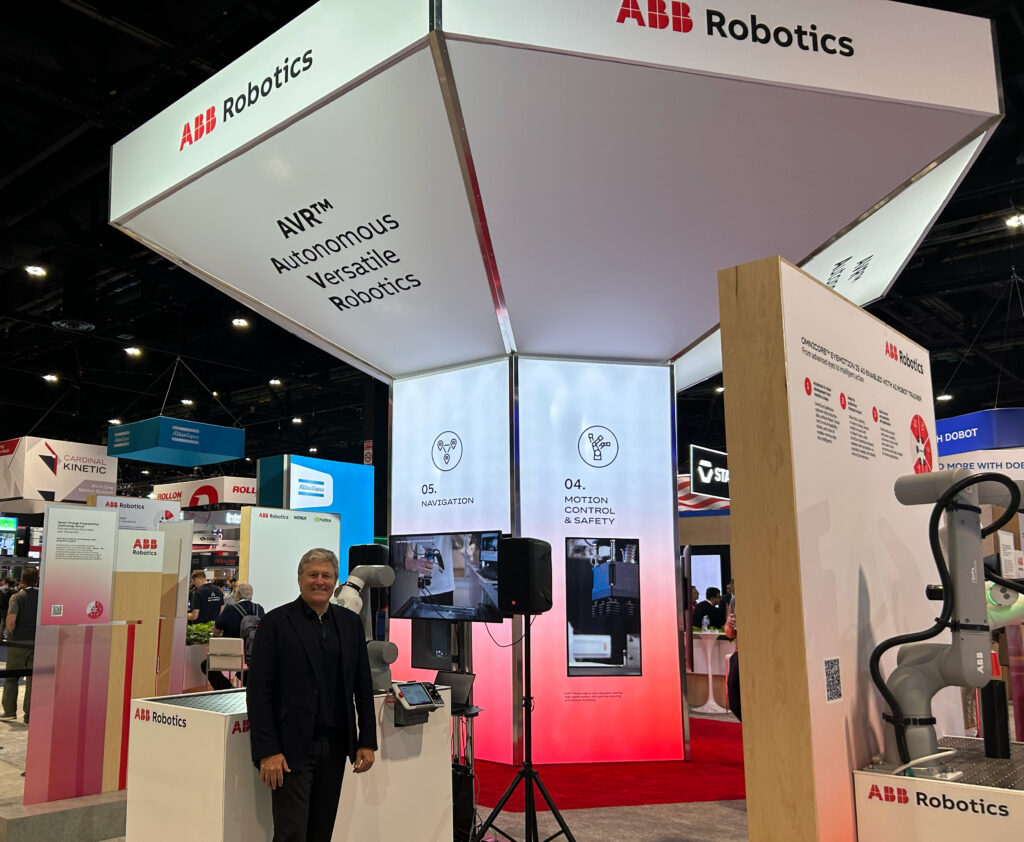
At Automate 2026 in Chicago, companies including FANUC, ABB, Bosch Rexroth, and Schneider Electric highlighted applications using AI across robotic handling and palletizing, line monitoring, and machine design.
For OEMs and engineers, AI is also changing some of the work that happens before equipment is ever built. FANUC is using AI and simulation to model more of the physical conditions a robotic application could encounter before it reaches production.
“It’s making that pre-engineering so much more powerful,” said Wes Garrett, FANUC’s executive director of global accounts for food and beverage. “Before anyone ever cuts metal, you’re assured of what you’re going to get.”
Handling more variation in the product flow
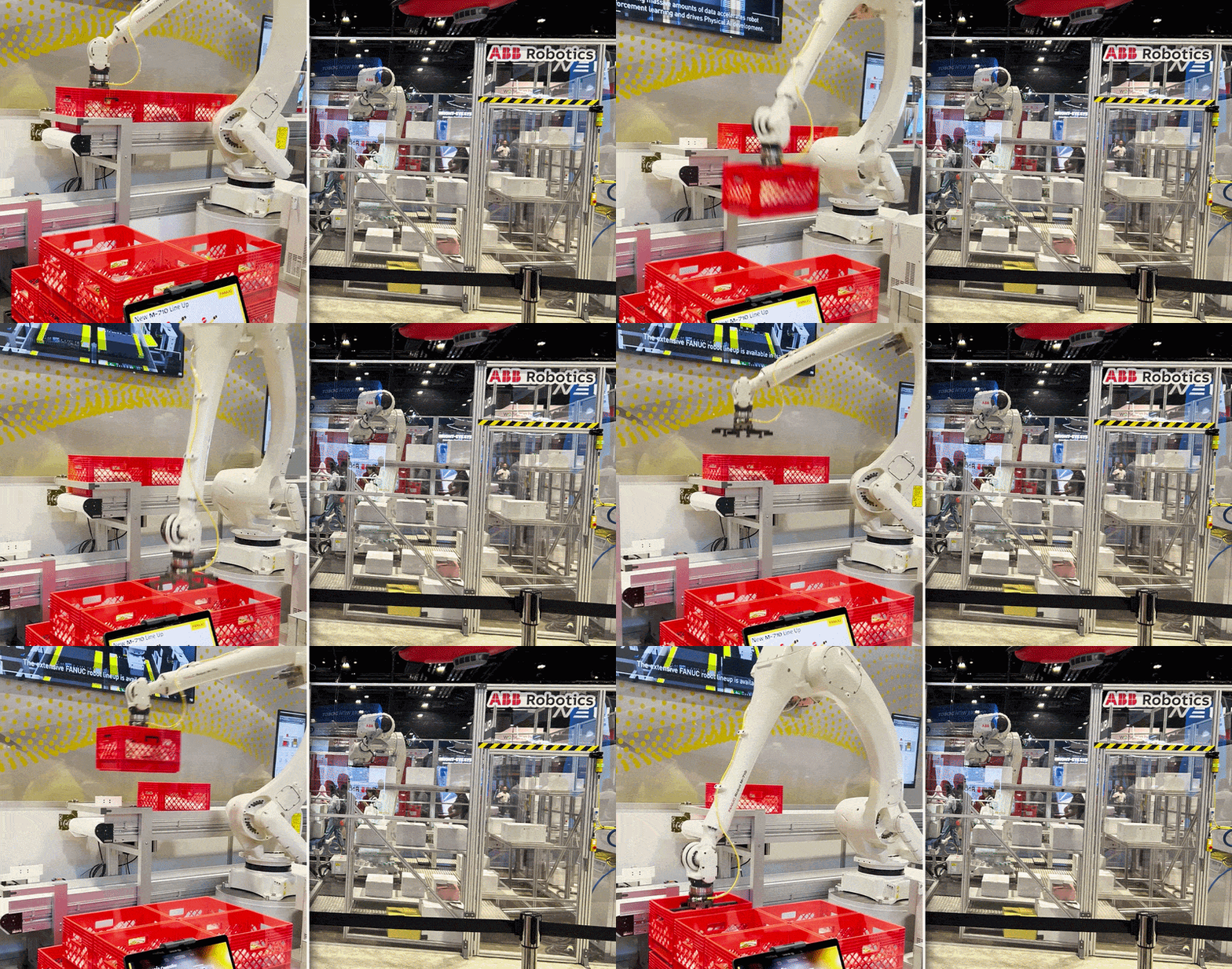
At the end of the line, mixed-case palletizing brings its own set of variables. Packages may arrive in different sizes, weights, and sequences. Existing facilities do not always have the space to add equipment that puts every case into a predetermined position.
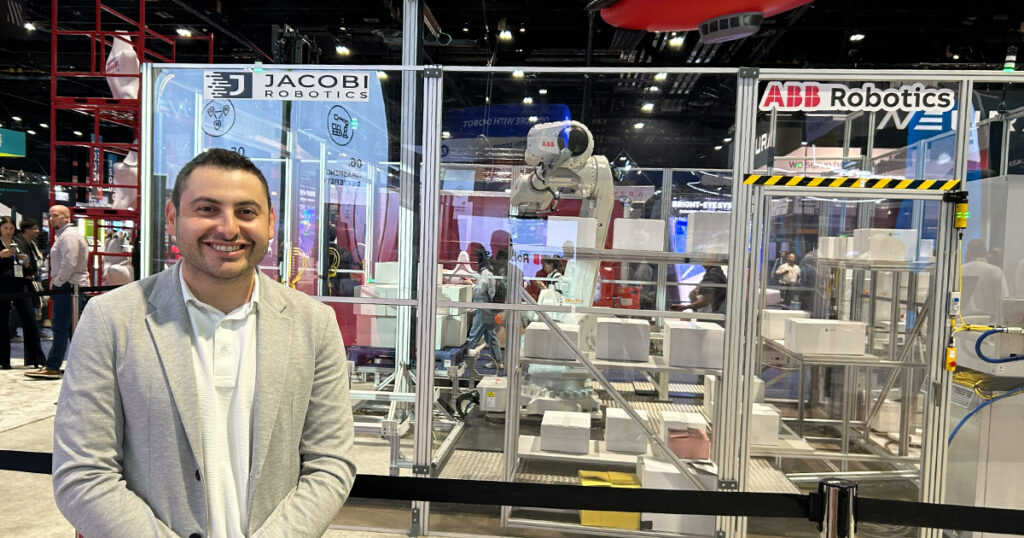
Craig McDonnell, managing director of business line industries at ABB Robotics, explained how the company is using physical AI to address those challenges in brownfield applications, where mixed-case palletizing may need to work with packages arriving randomly without large reorientation systems upstream.
“If you’re going to do that right, you’ve got to be able to have parts coming in randomly. You don’t have room for large reorientation systems,” said McDonnell.
AI-enabled palletizing can also reduce how much the system depends on knowing what will arrive next and how it will be presented.
“By introducing artificial intelligence into these applications, we are now able to allow our customers to operate in much more dynamic spaces where we don’t necessarily have as perfect a sequencing as we may have required in previous environments,” said Ben Perlson, segment manager for consumer industries at ABB.
Farther upstream, the variability can come from the product itself.
FANUC is applying AI and real-time vision to applications where products move or cannot easily be presented in a consistent position. In Chicago, the company demonstrated the approach with a camera-equipped robot inserting and tightening bolts into a moving engine head. Using Inbolt’s physical AI technology and NVIDIA-powered processing, the system tracked the part in real time and adjusted the robot as its position changed.
“In the past, you’d have to find that with 2D vision and then track it very precisely, so you’d have to have a very precise conveyor and possibly a lift and locate where you’re going to stop and actually insert that bolt,” said Garrett. “Now, we can actually servo track it. The camera that’s on board this tool is taking real-time images of those bolt holes so it can go in and drive those.”
While the demonstration was automotive-based, Garrett said the same approach could apply to food products that do not arrive in uniform shapes or positions. Picking products such as chicken breasts or hamburger patties directly from a pile is one example.
“One of the major solutions you want to try and solve in the protein area is picking from a pile,” said Garrett. “It’s always lower cost to be able to pick products from a pile, because when they get processed, they typically go into a bag or a hopper.”
Before a robot can make a reliable pick, those products may need to be separated, spaced, and positioned using additional conveyors and floor space. AI and vision technologies can help the robot locate the product and adjust its pick based on what it sees, reducing some of that preparation.
Making machine data usable
As packaging equipment becomes increasingly connected, AI depends on a steady flow of data about what is happening across the line.
Krupa Ravichandraan, sales product manager for Bosch Rexroth, explained that smart conveyance is gaining traction in pharmaceutical manufacturing, where pill bottles and totes need to be tracked as they move through production. He said connected sensors and Industry 4.0 technologies can give manufacturers earlier insight into potential equipment issues.
“Overall, it helps to have various sensor technologies and Industry 4.0 solutions on these material handling solutions and packaging solutions, because it helps them to know when there could be a failure in the system,” said Ravichandraan. “Even before the failure happens.”
The information can go beyond monitoring for failures. Ravichandraan said manufacturers can use it to identify production bottlenecks, see where operator inefficiencies are occurring, and make quicker changeovers.

Subscribe to the Packaging OEM newsletter
Get the latest news, trends, and technology updates delivered straight to your inbox and make smarter packaging decisions.
That data can help manufacturers respond to changing conditions, but only if it is available across the systems that need it.
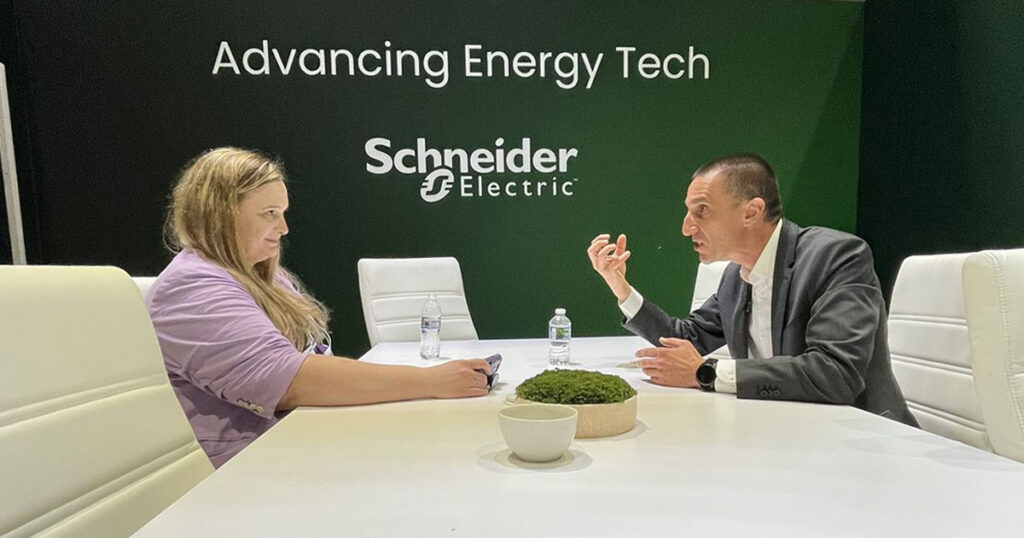
Fabrice Meunier, vice president of industrial end users and software business for Schneider Electric, said open, software-defined automation can help make that data more accessible by reducing reliance on hardware-specific platforms.
“It’s slowing the automation down because when you are hardware locked, you have no freedom to choose. You’re bound to an existing vendor, and your data is kept hostage on a platform,” said Meunier.
He said those silos can prevent data from moving freely between pieces of equipment, limiting how effectively AI can be used across the line.
On a high-speed packaging line, access to the data is only part of the challenge. The machine also must process it quickly enough to respond before production moves on.
Meunier used bottle filling as an example. If information has to travel to the cloud for processing and return to the equipment before a change can be made, several bottles may have already moved through the machine. He sees edge computing as one way to move that decision-making closer to the packaging process.
“The only way to be fast and efficient is to process AI at the edge, on the asset directly. That’s why the cloud in that case is not working very well for high-speed applications,” said Meunier.
Changing how OEMs engineer the application
AI is also beginning to change some of the work required to design and program robotic applications.
FANUC highlighted a generative AI application that allows a user to give a robot instructions by speaking to it. The system interprets the request, converts it into code, and creates the robot program. Garrett said the difference can be measured in the amount of programming time required.
“That would be light years of code to write to be able to handle all those different situations. Now it’s a matter of taking that interpretation of somebody speaking to the robot and then translating that into a digital format, translating it to Python code, and converting it over into FANUC language,” said Garrett. “You’re programming in seconds and minutes now. It’s incredible.”
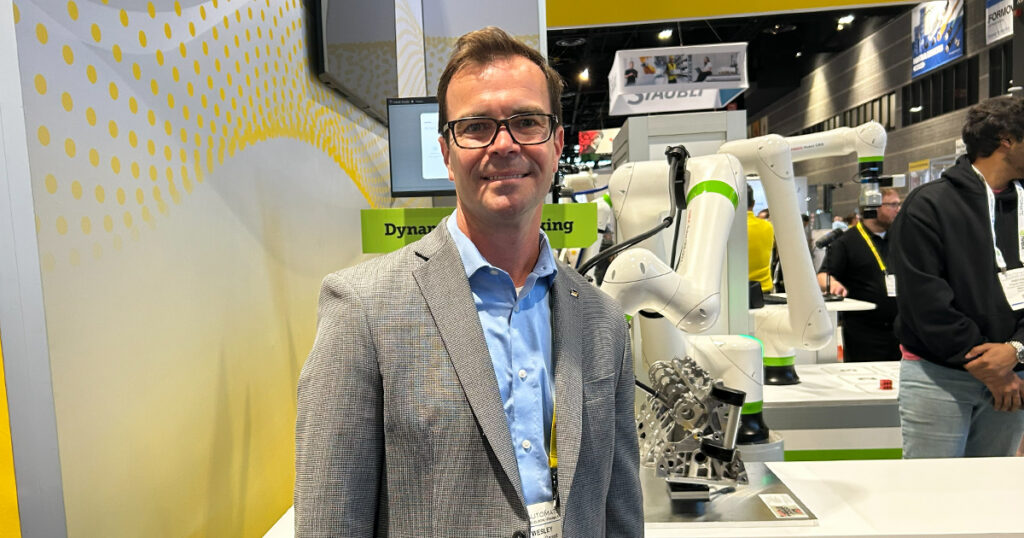
ABB is approaching the engineering side through vision integration.
McDonnell said roughly one-third of robots are integrated with some form of vision, but bringing the technologies together can add significant time to a project.
“You can now connect to any vision system and program that vision directly within the RAPID programming. It can take up to 90% of the time out of putting the vision and robot together,” he said. “And if one third of robots are using vision these days, that’s a big improvement.”
ABB is also using pre-trained AI models to reduce the setup required when a new product reaches the robot. McDonnell said the goal is to make it much faster to introduce new products to a robotic application.
“When we get to the deployment phase, the expectation is you take your cell phone, you take a picture of the device that you want to manipulate. You upload that, and then almost instantly, if you’ve pre-trained your models well enough for that environment or that application, be it handling fashion or handling parcels, you should then be up and running with your new application,” said McDonnell. “That is where this is going.”