Designing a new product or adopting digital processes on the plant floor or packaging line requires sophisticated software that can come with a hefty price tag. But some of the most innovative companies are small startups or mom-and-pop shops that often don’t have the budget to buy into a full suite of industrial software.
Recognizing this dilemma, Siemens rolled out a program based on its open digital business platform, called Xcelerator, that serves as a marketplace for hardware, software, and digital services. The Siemens Xcelerator for startups program is set up specifically for small and medium-sized manufacturers and OEMs.
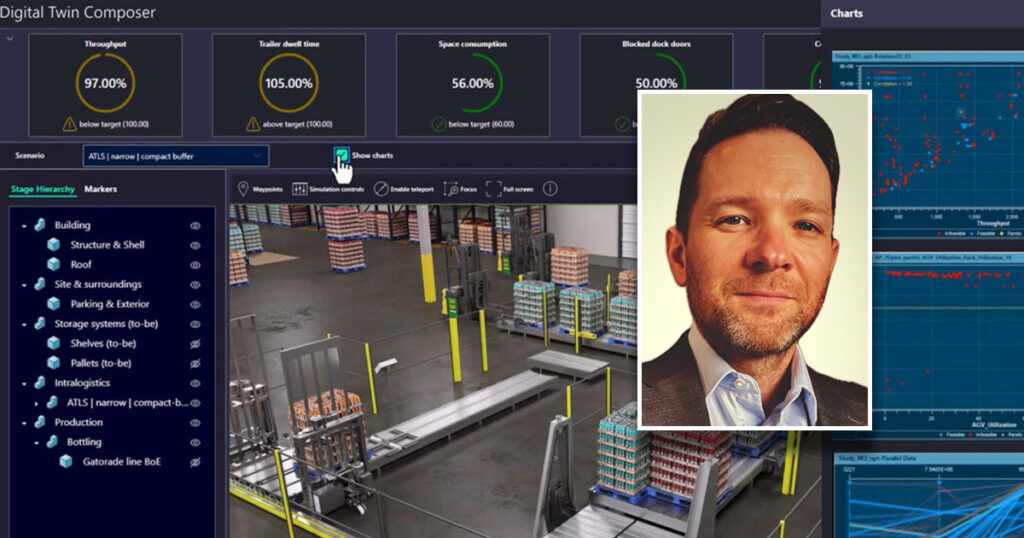
At Pack Expo East, Packaging OEM caught up with Bobby Cook, senior director and global SMB sector lead at Siemens Digital Industries Software, to talk about how the company is making the industrial tools SMBs need to succeed accessible, affordable, with a quick return on investment (ROI).
When and why did Siemens turn its attention to small and medium-sized businesses (SMB)?
Cook: Siemens has always invested into the startup and SMB communities, though five years ago, we made the strategic decision to really reflect on our product portfolio, our messaging, and our packaging to ensure that we are truly meeting SMB companies where they are.
Since then, we’ve been taking steps to make our Xcelerator portfolio more approachable, digestible and accessible to SMB sector companies. From an approachability standpoint, we are investing in the creation of “Right-Sized-for-SMB” packages that resonate with the specific needs and personas of SMB companies, ensuring low-complexity deployment and accelerated realization of ROI.
Regarding digestibility, we have been optimizing our messaging, web experience and user interfaces to ensure that they reflect the real-world, shop-floor challenges experienced by the SMB sector. And from an accessibility perspective, we’ve built a series of both Startup and Start-With programs ensuring that these communities can access our tools at a price point that works for them both today and into the future, with licensing that can easily grow and scale as the companies do themselves.
How does the Siemens for startups program work?
Cook: The Siemens Xcelerator for Startups program is our investment into the future of the engineering and manufacturing sectors. It ensures that we are equipping today’s most innovative companies with the capabilities that they need to turn their disruptive ideas into reality. With so many hurdles in starting a company and bringing a new product to market, the last thing we want to see as a hurdle is access to high-quality industrial software. For this reason, we built the Siemens Xcelerator for Startups program to ensure all startups have access to class-leading design, simulation, and data management tools, regardless of how early they are in their journey.
Smaller startups don’t have the same budgets as larger organizations. How is pricing set up to allow these companies access to cutting-edge software such as design, simulation, digital manufacturing, and data management?
Cook: That’s a great question, and one where we should also consider the large sub-sector of SMB companies that are too big to qualify for a startup program, but who are also small enough to need a bit of extra consideration regarding software purchasing, deployment, ease of use and pricing.
For the startup community, we have an application process on the Siemens Xcelerator for Startups website where companies can apply for multiple packages spanning design, simulation, and even electronics capabilities. We work with each startup individually to assess their level of maturity and need, then provide them access to the same class-leading tools and support as their enterprise counterparts.
For SMB companies too large or mature to qualify for our startup programs, we also offer Start-With packages that provide high-ROI access to our tools at very accessible price points. We recently released our Start-With Product Design package and are prepping to release Start-With Simulation plus multiple industry-specific Start-With packages that will be made available through our network of channel partners…….stay tuned!
These SMBs may not have the expertise on staff to deploy and maintain the Siemens software. Do you support them with aftermarket services?
Cook: I spent the first 10 years of my career as an engineer in the SMB sector myself, so this topic is very close to my heart. Back then, we had to maintain entire rooms of high-performance computing hardware, as well as the infrastructure and teams to maintain both the hardware and software systems. Not only that, we also had to regularly outsource work to IT specialists when the time came to upgrade hardware systems and software licenses, which was very costly and time consuming. I’m happy to share that with the prominence of cloud-computing, these concerns are now a thing of the past, which for SMB customer means more capital to invest in what truly matters – getting product out the door, revenue in, and company growth!
But the challenge didn’t stop at just maintaining IT hardware. Historically, industrial engineering software was only available via perpetual licensing, meaning large up-front capital investment into expensive software tech stacks. While less of a challenge for enterprise-sized companies, for startups and SMB companies this often resulted in situations where a lot of compromises were made regarding industrial software purchasing and very unclear ROI on the investments.
To address this challenge Siemens recently migrated our portfolio to a software-as-a-service (SaaS) licensing mechanism, meaning SMB companies now have the ability to access class-leading tools such as Designcenter X, Simcenter X and Teamcenter X with a simple “pay as you go” pricing mechanism.
In addition to making IT hardware investments and maintenance a thing of the past, this dramatically reduces both risk and barriers to entry for startup and SMB organizations to have access to a software tech stack that scale as they do, without the need for large, up-front capital expenditure. The end result is a much more predictable annual software spend, and much more visibility and control into the scaling and expansion of required capabilities. This is, without a doubt, a true game-changer for the SMB sector.
Does Siemens embed artificial intelligence (AI) into its design and simulation products that could help SMBs get started faster or work more efficiently?
Cook: It wouldn’t be a manufacturing conference if we didn’t touch on AI, would it? Kidding aside, the meaningful integration of AI into our tools is the single most important priority in the Siemens Digital Industry Software technology roadmap. I can say with 100% confidence that the companies who will benefit most from AI-powered engineering and manufacturing software will be in the SMB sector.
At Siemens, we understand the power of industry-specific subject matter expertise, and we also know that access to this expertise is often a major hurdle for SMB companies. Because of this we have been actively training and embedding industry-specific AI into our tools that provide high-ROI insights, recommendations, and automations across entire product lifecycles. This is why it’s so important that SMB companies leverage our network of industry-expert channel and technology partners who can ensure that you not only have access to the products themselves but understand how best to leverage the embedded AI capabilities that address real-world, industry-specific, shop-floor challenges.
Why are you here at Pack Expo East? Is this a market segment that could use this startup program?
Cook: Pack Expo is a premier tradeshow for Siemens, and for good reason! Often, when people think about cutting-edge industrial software products, their minds immediately go to what we lovingly refer to as “wings and wheels,” the aerospace and automotive industries. But you may be surprised to learn that it’s the processing industries that are really pushing our products, and our product roadmaps, to their limits!
The consumer products, life sciences, chemical, and energy sectors have been some of the quickest to adopt cross-enterprise digital twin capabilities, with the explicit goal of minimizing time, cost, and risk across full product lifecycles.
A fantastic example of this is Siemens industry-first AI and Digital Twin collaboration with NVIDIA and PepsiCo, which has digitized PepsiCo’s entire manufacturing operation and has resulted in a 20% increase to production throughput with a 15% decrease in capital expenditure costs. While of course PepsiCo is a very large enterprise company, there is a network of hundreds of SMB companies around the world serving as their supply-chain and who are actively deploying the same capabilities, with even larger ROI.
How does a company get started with the Startup program?
Cook: The best way to get started is to visit the Siemens Xcelerator for Startups webpage. Here companies interested in our startup program can watch video overviews of the program, learn about the application process and also see video showcases where active startup partners are using our tools to unlock real-world ROI. I’m inspired daily by the ambition and creativity of our startup partners and can confidently say that their ingenuity pushes and influences our software roadmaps just as much as enterprise companies.

Subscribe to the Packaging OEM newsletter
Get the latest news, trends, and technology updates delivered straight to your inbox and make smarter packaging decisions.