As packaging lines handle more formats and operate at higher speeds, manufacturers are looking for ways to improve energy efficiency without slowing production.
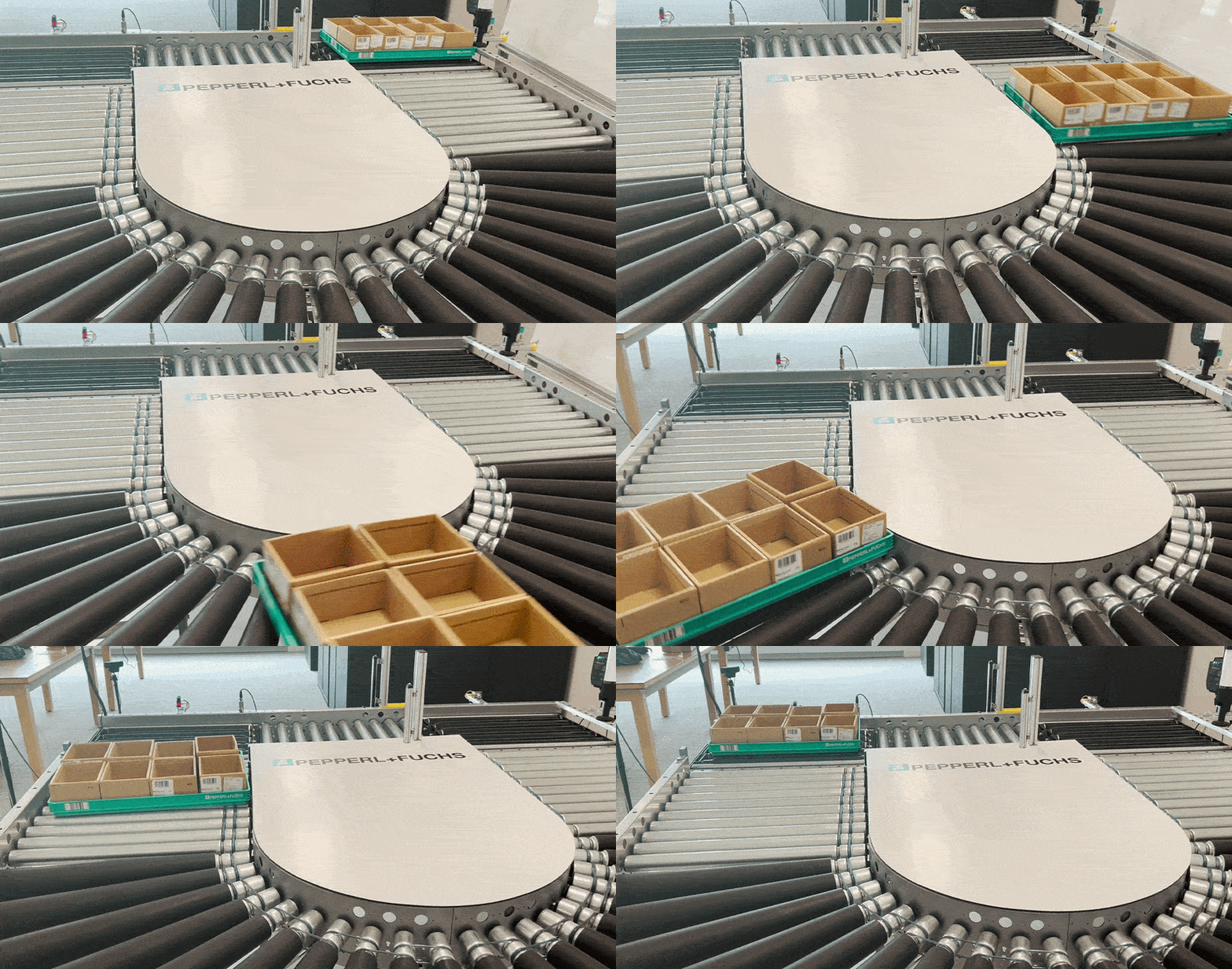
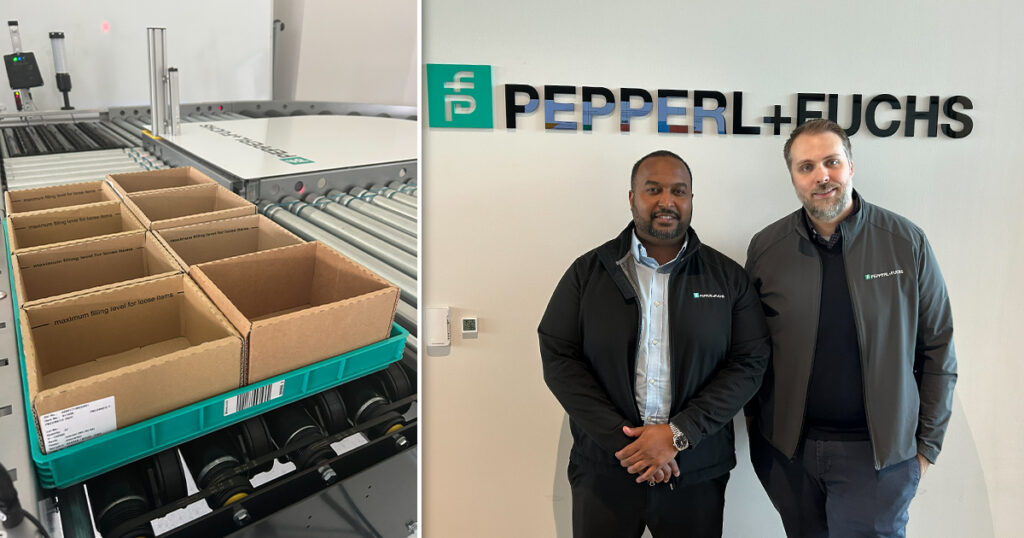
That challenge was on display inside the industrial sensor lab at Pepperl+Fuchs’ North American headquarters in Twinsburg, Ohio. During a recent on-site visit, Packaging OEM saw conveyor zones turn on and off in sequence instead of operating continuously across the entire line.
As products advanced through the system, Pepperl+Fuchs’ photoelectric sensors and G20 Ethernet motor control modules activated rollers only when packages moved into position, then shut sections back down once products cleared the zone.
The demonstration highlighted how packaging systems are becoming more responsive to real-time product movement through sensing, conveyor control, and tracking technologies designed to reduce unnecessary operation, which also reduces unnecessary energy use.
It’s a shift that Gerry Paci, market manager for Pepperl+Fuchs’ material handling group, has witnessed firsthand.
“In my 10-plus years, we’ve seen efficiency go from something that’s not always running to running only when you need it,” said Paci. “It only needs to run when a package has been detected on the conveyor.”
Detecting different packaging formats
Photoelectric sensors are among the most common technologies Paci sees used across packaging lines for product presence detection. The sensors use light to identify when a package is in place and communicate with conveyor controls to activate rollers only when products are detected.
Different packaging formats often require different sensing technologies, according to Paci. Flexible pouches may require a wider light array to distinguish products from the conveyor itself.
RESEARCH | Energy Efficiency in Packaging Machines: A Growing Priority
“Something that’s flat and thin like a pouch, we have one sensor that’s dedicated to pretty much just that,” said Paci, referring to the company’s R305 area sensor. “Instead of just one light spot, it has a wide band, or what we call an array of light, to detect those small, thin packages on a conveyor that’s equally as thin.”
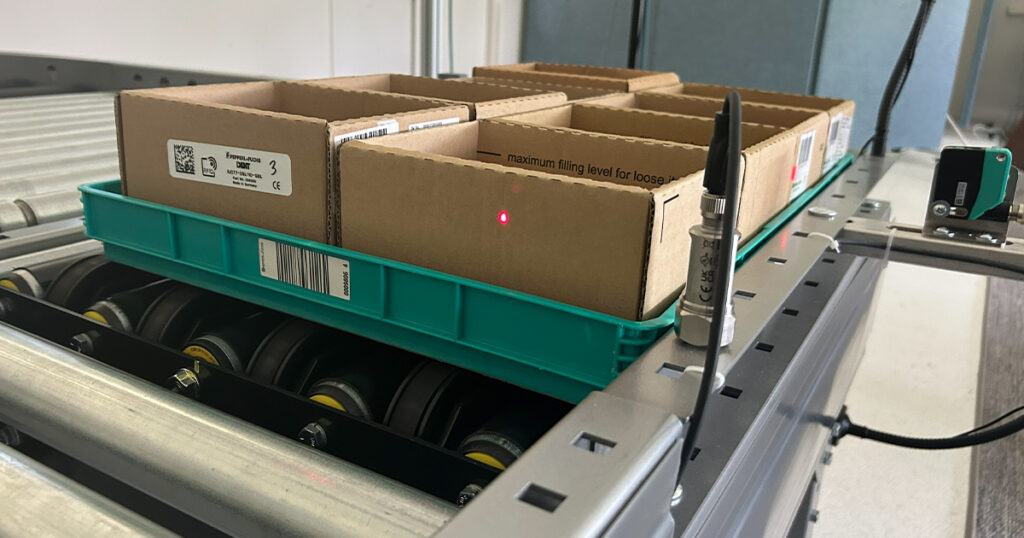
For applications with totes, Pepperl+Fuchs uses more distance-based detection methods.
“When you have something that’s looking for a tote, and you want to know how far away it is, you’d use an R10X sensor that detects if the tote is there with a single beam of light,” said Paci.
Zone-based conveyor control drives efficiency
The sensors also work with Pepperl+Fuchs’ G20 Ethernet motor control modules, which operate conveyor rollers across packaging lines.
The G20 is designed to work with photoelectric sensors to activate conveyor zones only when products move through the line, reducing energy use by avoiding continuous roller operation. Paci described the system as a “trigger sensor” approach, where one sensor detects when a package is coming into position, and another confirms when it has passed through the zone.
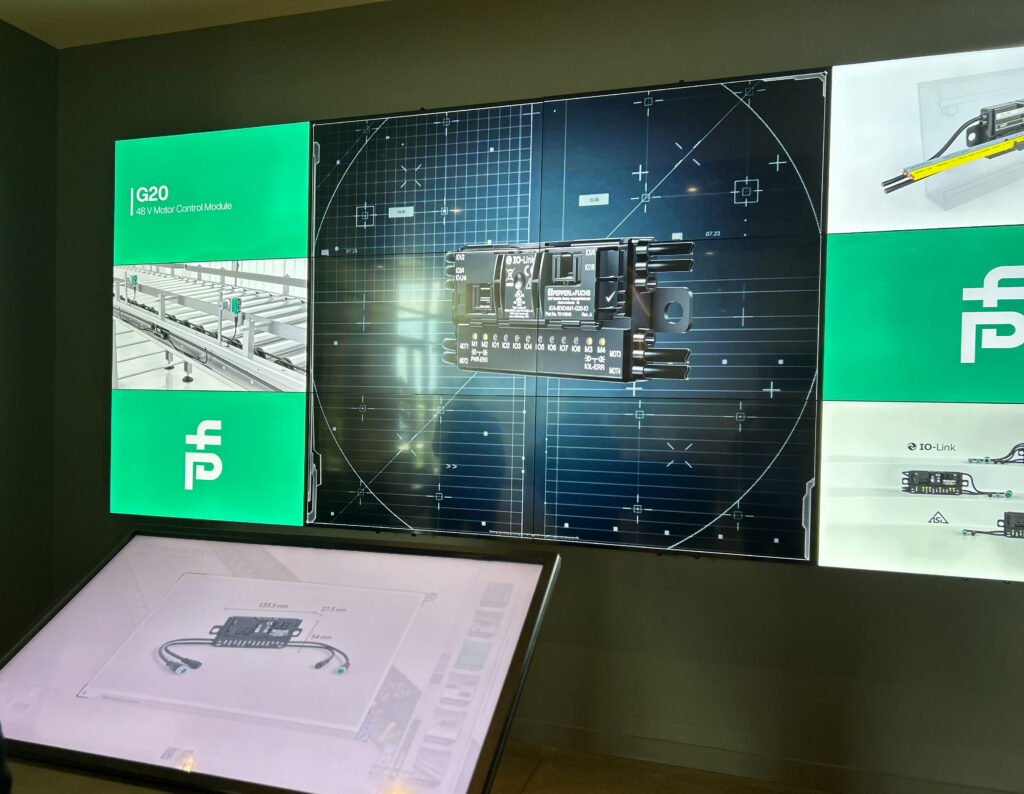
“Those rollers aren’t running all the time,” said Paci. “Our sensor detects the package and immediately tells the rollers to activate. Once the next row of sensors detects the package, it tells those rollers to stop.”
RELATED | Smart Conveyors: Redefining Material Handling and Packaging Line Performance
The company recently added the Ethernet version of the G20 in response to customer demand for expanded connectivity in North American operations.
“Here in the Americas, Ethernet is very important,” said Paci. “Our customers and our market were telling us we needed an Ethernet option, and we listened to that.”

Improving visibility across the line
In addition to sensing and motor control technology, Pepperl+Fuchs also highlighted radio frequency identification (RFID) and data collection technologies to improve visibility and support predictive maintenance across packaging and material handling systems.
According to Zachary Steck, Pepperl+Fuchs’ market specialist for automated guided vehicles (AGV) and autonomous mobile robots (AMR), RFID systems give operators real-time visibility into where products are moving through a facility rather than having to manually track them.
PHOTOS | What we saw at Modex: palletizing, vision, RFID, and AMR systems in action
“RFID for us is more of an identification tool,” he said. “We’d see that in track-and-trace type applications, so that can get into sustainability as well.”
The company is also collecting diagnostic data through technologies such as IO-Link to support predictive maintenance and reduce unplanned downtime. Steck said access to operational data can help manufacturers avoid replacing components based only on scheduled maintenance intervals.
“We now have the data to know, ‘Oh, this product could have lasted three more years,’” he said.
Energy efficiency through responsive movement
Whether identifying a pouch on a conveyor or tracking a tote through a facility, the technologies demonstrated throughout the industrial sensor lab centered on creating more energy-efficient packaging systems that respond only when movement is needed.

Subscribe to the Packaging OEM newsletter
Get the latest news, trends, and technology updates delivered straight to your inbox and make smarter packaging decisions.