In episode 41 of The Downtime, a weekly manufacturing podcast from WTWH Media, co-host Sarah Wynn chats with Andrew Morehead Jr., director of global standards at GS1 US, the nonprofit organization behind the barcode.
The conversation covers 2D barcodes, Sunrise 2027, the industry’s date to transition to 2D barcodes at point-of-sale systems, and what OEMs need to know to prepare their lines.
Sunrise 2027 and 2D barcodes explained
The first universal product code (UPC) was scanned in Troy, Ohio, more than 50 years ago, transforming the checkout process by replacing manual price entry with automated scanning.
Since then, packaging and consumer behavior have evolved. Lines have become faster, formats have multiplied, and SKUs have increased, presenting new data opportunities for both machine builders and manufacturers. On the horizon is the next shift for barcodes: Sunrise 2027.
“Sunrise 2027 is a global initiative, but Sunrise is the domestic U.S. version of it,” said Morehead. “What that means is that basically, 2D barcodes are getting ready to be accepted at point-of-sale retail.”
RELATED | 2D barcodes scan in a new wave of digital transformation in packaging
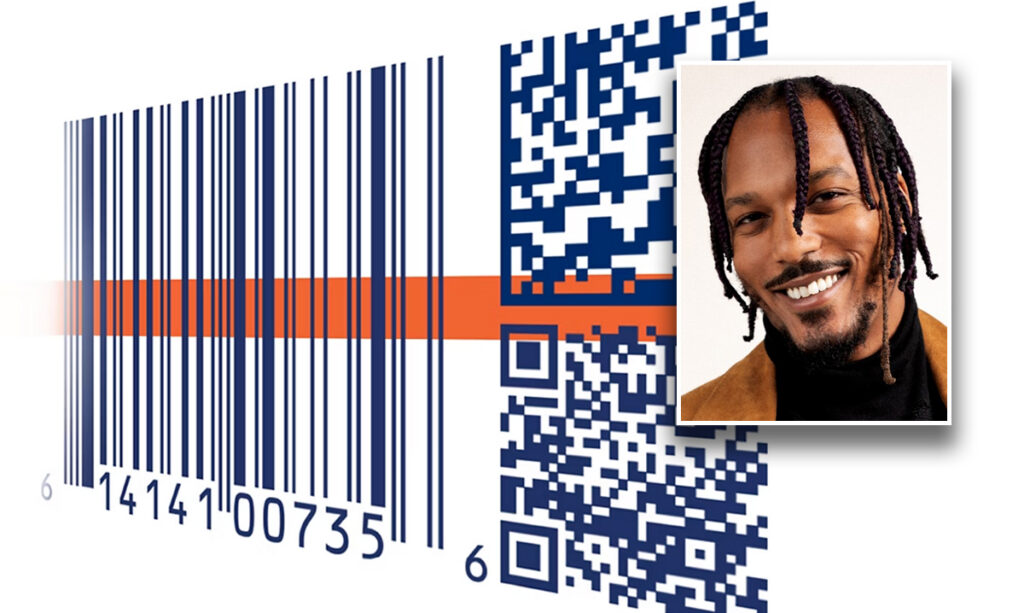
These barcodes resemble QR codes and store information both horizontally and vertically, holding significantly more data than a traditional 1D barcode in a smaller footprint.
“People want more data, marketing wants more ways to market, and regulations are just increasing,” said Morehead. “With a 2D barcode, you’re able to put all of this additional data into it to be able to do these things.”
He added that there is no sunset date for 1D barcodes. Brands will use dual-mark packaging during a migration period, incorporating 1D for legacy systems and 2D for expanded capabilities.
Preparing packaging machinery for Sunrise 2027
On the packaging line, the shift to 2D impacts printing and scanning. With greater density, print quality becomes even more important.
Machine builders and solution providers are increasing print capabilities to apply 2D barcodes at production speeds while maintaining quality.
RESEARCH | Dynamic Applications of Labeling, Coding, and Marking
“They are increasing the print technologies to be able to apply those barcodes at the same speeds that they’re doing on the manufacturing line, while maintaining the quality,” explained Morehead. “You don’t want to print these barcodes too fast so that they don’t scan.”
Unlike traditional UPC labels that can be pre-printed, 2D barcodes can include information like expiration dates or batch numbers that are created during production.
“You can’t really pre-print these labels with your dynamic data,” said Morehead. “When it comes down to you needing to put the expiration date or batch lot, you can’t pre-print those dates because you haven’t actually created the product, and then the accuracy of the expiration date would just be null and void at that point.”
WEBINAR | Smart Packaging in the Beverage Industry
Poor print quality can result in scan failures, especially on high-speed lines. During the migration period, 1D and 2D barcodes must be printed in close proximity to prevent double scans at checkout.
Smaller manufacturers and OEM assistance
For smaller manufacturers, the barrier to entry can be lower than it appears, especially if they already use QR codes and can align with GS1 standards on upcoming packaging updates.
“With those smaller manufacturers, it’s a lot easier for them to just put the 2D barcode on the package with the identification data in it and then start to get that real-time data and feedback,” said Morehead.
RELATED | NRF insights: GS1 US explores AI, 2D barcodes, and RFID in packaging
GS1 US also offers discussion groups for machine builders and manufacturers to learn how peers are adapting equipment for 2D implementation.
Listen to the full episode of The Downtime to hear how GS1 US offers accessibility barcodes and how the extra data in 2D barcodes benefits inventory management and product recalls.
Episode 41: 2D or Not 2D | Show notes & time stamps
00:17 – The co-hosts open the show
01:39 – Wynn shares Packaging OEM headlines, including Coesia’s acquisition of the Rotzinger Group and Orbis’ acquisition of Robinson Industries. She also highlights Blecon’s Agent, a Bluetooth digitization solution for warehousing
02:32 – Kasprzak highlights Plant Engineering news, including Dan Furrow’s article on industrial robot technology for efficiency and safety on the plant floor
03:29 – Wynn introduces this week’s interview guest, Andrew Morehead Jr., director of global standards for GS1 US. The discussion covers 2D barcodes, Sunrise 2027, and how OEMs can prepare packaging lines for the transition to 2D barcodes
04:26 – Morehead defines Sunrise 2027, the industry’s date to transition to 2D barcodes at point-of-sale systems
11:32 – Wynn and Morehead discuss OEM adoption strategies for 2D barcodes
13:13 – Morehead explains how packaging machine builders are adapting technology to read 2D barcodes at line speeds
24:29 – Interview with Morehead wraps
25:09 – Wynn and Kasprzak discuss events they will attend this spring
28:50 – The co-hosts wrap up the episode
About The Downtime podcast and co-hosts
The Downtime is a weekly manufacturing podcast from WTWH Media that features insights from its automation publications. It’s co-hosted by Wynn, who serves as the senior editor (digital) for Packaging OEM, and Kasprzak, who is the executive editor for Plant Engineering, Control Engineering, and Consulting-Specifying Engineer.
The podcast is available weekly on YouTube, SoundCloud, and Spotify.
Check out The Downtime’s recent episodes
Episode 36: How Weintek’s HMIs act as a “universal remote” for packaging OEMs
Episode 37: CAPTRON on sensing technology for washdown environments
Episode 38: Festo on safety-integrated servo drives for packaging
Episode 39: Bosch Rexroth on modular conveyor design for CPG packaging lines

Subscribe to the Packaging OEM newsletter
Get the latest news, trends, and technology updates delivered straight to your inbox and make smarter packaging decisions.