Once a product leaves the packaging line, plenty of work remains. Inspection, handling, palletizing, warehouse movement, and even truck loading are increasingly part of a more automated flow.
In this edition of On the Line, we look at how automation is connecting packaging with downstream and warehouse operations. We also explore how physical AI is taking on variable logistics work, collaborative palletizing for higher-payload applications, and why integration is becoming a bigger consideration for OEMs.
Want access to our curated email newsletter? Subscribers receive it every Tuesday. Click here to sign up.

Subscribe to the Packaging OEM newsletter
Get the latest news, trends, and technology updates delivered straight to your inbox and make smarter packaging decisions.
Beyond the conveyor: How automation connects packaging lines to the warehouse
Packaging may be one step in a product’s journey, but automation increasingly connects what happens next.
Direct Conveyors, Coesia’s AMC Automation, Rockwell Automation, and The Raymond Corporation show how conveyors, vision systems, warehouse automation, and orchestration software are helping reduce manual handoffs as products move beyond the packaging line.
“When we talk about end-to-end, we’re really thinking about from order creation through delivery, and all the steps in between,” said Ara Surenian, business manager for production logistics at Rockwell Automation. “From managing the inventory, deploying the inventory to the production line, moving it through, and then from there going to the warehouse and out the door.”
→ Read more

Dexterity ‘superhumanoid’ robot uses physical AI for truck loading and unloading
Truck loading is difficult to automate because boxes arrive in different sizes, shapes, weights, and conditions.
Dexterity’s Mech robot uses physical AI to respond to those changing conditions, while Beckhoff Automation worked with Dexterity on the control architecture connecting motion, safety, navigation, and data.
“It’s just like you’re playing Tetris,” said Robert Sun, co-founder and founding engineer at Dexterity. “This is a weird game that you have to play or learn on the job that can’t really be automated, no matter how hard you think about it.”
→ Read more

Packaging automation shifts to ease warehouse integration, says Interact Analysis
As packaging becomes part of broader warehouse automation projects, ease of integration is becoming a bigger consideration for OEMs.
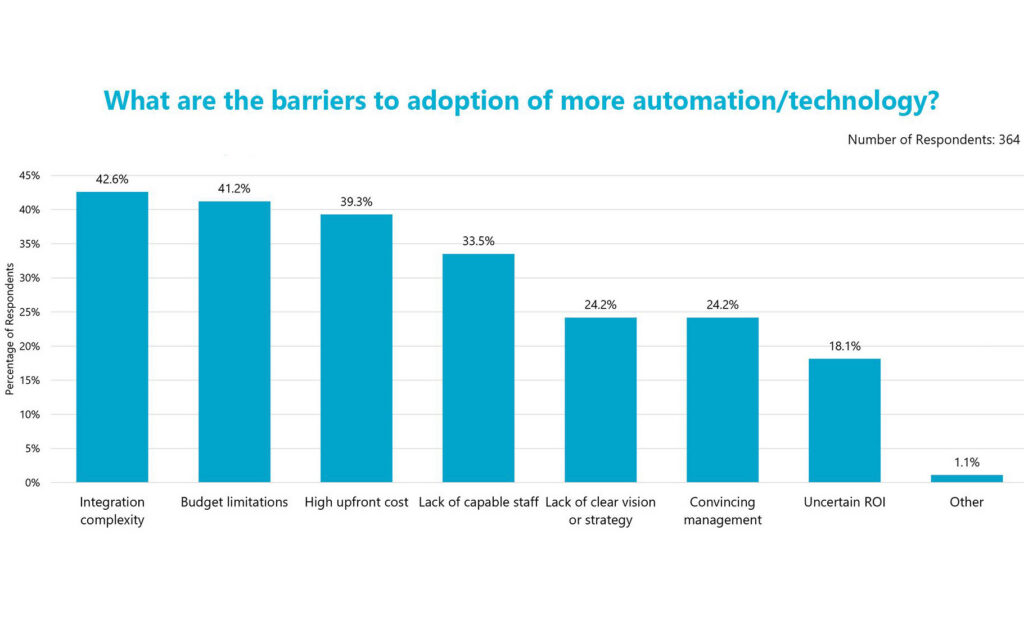
Interact Analysis’ Vanessa Lopez explains that suppliers are putting more emphasis on modular design, simpler deployment, and compatibility with existing warehouse systems. The firm’s research found integration complexity was the top barrier to adopting more automation and technology.
→ Read more
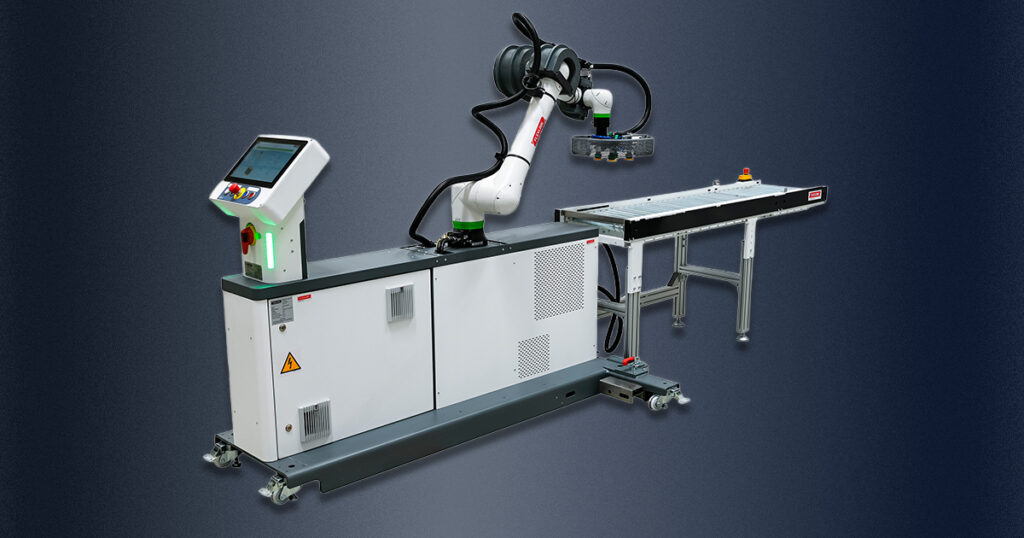
FlexLink brings higher payloads to collaborative palletizing
Collaborative palletizing is expanding into applications that require heavier payloads and higher throughput.
FlexLink’s RC20 can handle payloads up to 17 kilograms and reach speeds of up to 12 boxes per minute with double pick. Robot Config software also allows users to create pallet patterns and make changeovers without robotic programming experience.
“With RC20, we are extending collaborative palletizing into applications that require higher payloads and throughput, while preserving the compactness and accessibility that make this technology valuable on the shop floor,” said Henrik Furhoff, CEO of FlexLink, in a statement.
→ Read more
Final takeaway
Automation is extending beyond individual packaging machines. As more downstream processes become automated, how well those systems connect is becoming just as important as what each can do on its own.