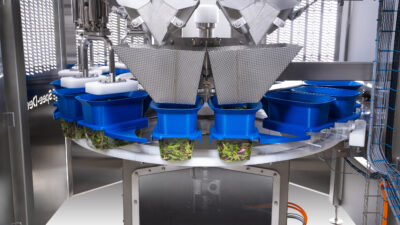
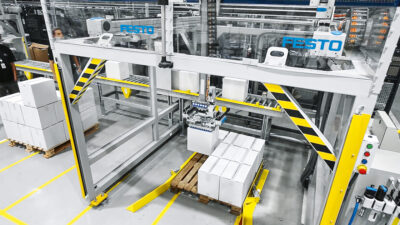
Packaging OEM spent 2025 covering how machine builders, manufacturers, and technology providers navigated evolving materials, regulatory updates, automation advancements, and growing sustainability expectations.
From preparation for the industry’s switch to 2D barcodes to developments in flexible packaging and traceability, along with real-world machine installations like Coal’d Water’s flexible co-packing line, we covered the packaging world’s constant movement.
These are our 10 most-viewed stories of the year, spotlighting the conversations and video demonstrations that captured the most interest while highlighting the technologies and people behind them.
1. 2D barcodes scan in a new wave of digital transformation in packaging
Ahead of Sunrise 2027, the industry’s date to transition to 2D barcodes at point-of-sale systems, experts from GS1 US explained what the shift means for packaging machine builders and how manufacturers can leverage the information behind each scan.
2D barcodes can store information vertically and horizontally, making them capable of holding up to 4,000 more characters compared with the standard 12 digits of a 1D barcode. This capacity allows manufacturers to encode details such as expiration dates, allergens, and batch numbers while supporting opportunities for dynamic consumer engagement on smartphones.
“What’s great with 2D barcodes is what’s printed on the can or package can stay static, but on the back end, you can redirect it to a different experience,” said Amber Walls, senior director for global standards at GS1 in the Packaging OEM webinar “Smart Packaging for the Beverage Industry,” available on demand.
Machine builders will support the transition by adapting printers, maintaining speed on the line, and using barcode data to optimize equipment performance.

2. A deep dive into flexible packaging: evolving sustainability, consumer convenience drives growth
If you’ve ever grabbed an Oreo from a resealable package or squeezed Daisy Sour Cream out of a pouch, you’ve engaged with the consumer convenience features of flexible packaging.
Global research firm Research and Markets projects that the format will grow into a $353.8 billion industry by 2034, driven by the rising demand for flexible plastic materials, sustainability initiatives, and consumer preferences. This feature story explores materials, formats, and the critical role OEMs play in flexible packaging’s success.
“Paper-based flexible packaging runs on packaging equipment very differently than traditional films and structures. Without the work of OEMs, challenges such as decreased efficiencies would make it more difficult to deliver commercially viable solutions,” said Jake Branyon, associate director of R&D at TOPPAN Packaging Americas.

3. United States of Packaging: 2025 regulations machine builders need to know
Various state laws and pieces of legislation went into effect this year that shifted both the manufacturing and consumer landscapes in the United States. Updates included bans on single-use plastic items and polystyrene foam containers used for primary packaging, along with changes to packaging labeling and plastic shrink wrap.
These changes affect machine builders and manufacturers in areas such as regulatory compliance, sustainability initiatives, market access, customer demand, and safety.

4. Zebra Technologies expands packaging visibility with scan tunnel, RFID tools
At Automate 2025 in Detroit, Zebra Technologies demonstrated its Aurora Scan Tunnel and radio frequency identification technology (RFID) capabilities, highlighting how automated identification improves visibility in packaging environments and warehouses.
Through a partnership with Xemelgo, Zebra is pairing hardware with cloud-based applications that deliver real-time tracking across operations such as barcode reading, inventory tracking, and verification.
“RFID deployments that used to take months or years with traditional systems integration work, we now do in one to two days with Zebra and their channel partners,” said Garrett Gross, director of growth at Xemelgo.
5. Coal’d Water’s modern packaging line taps into OEM technology for distilling ambitions
Rooted in the heart of the Great Smoky Mountains, Coal’d Water Distilling Company is tapping into its natural spring to can and sleeve a variety of beverages, including sparkling water and ready-to-drink cocktails, on its co-packing line.
Founder John Burleson shared how he assembled the line with robotics from Fanuc and equipment from notable OEMs, including Cask Global Canning Solutions, Multi-Conveyor, DMM Packaging, nVenia, Domino North America, Lantech, Hermis Company, Tripack, and Hamrick Packaging Systems.
The journey to this fully equipped line began with a reality TV appearance, Burleson explained, and ultimately led to backing from Kentucky basketball legends.
As co-packing operations run in the Tennessee facility, barrels of bourbon age on-site, setting the stage for the company’s next chapter in spirits.
“We’re financially prepared to keep investing, as this is a company we truly believe can be successful long-term,” said Jordan Hamrick, equity partner of Coal’d Water.

6. Digitization software enables real-time supply chain traceability
Antares Vision Group’s Diamind Connect cloud-based platform provides real-time traceability to manufacturers and machine builders. The modular system integrates with existing infrastructure and assigns each product a unique digital identity that can be tracked via QR codes, DataMatrix, NFC, or RFID.
“One of its core strengths is its flexibility in traceability, which can be implemented at the item, batch, or SKU level, offering varying levels of granularity. This flexibility ensures that products are tracked with precision, from individual units to entire production batches, capturing every relevant detail for easy access,” said Fabio Bonetti, Antares Vision Group’s Diamind Connect product manager.
The platform also offers specialized modules for sustainability analysis, second-hand product traceability, and customer engagement tools. The data remains controlled by the brand owner, with optional blockchain support for secure tracking.

7. Ranpak highlights automation in packaging machinery, including on-demand printing
At ProMat in Chicago, Ranpak unveiled its Print’it machine, which provides manufacturers with the ability to print full-color customized designs on up to 15 boxes per minute. It gives companies a way to enhance customer loyalty with a personalized unboxing experience, as it prints pictures, text, and PDFs.
“It produces customized printing of any image of your choice. This is a little bit of our parlor trick,” said Bryan Boatner, Ranpak’s global managing director for automation, who used artificial intelligence (AI) to print an image of a dog in a warehouse onto a box in the spring of 2025.
The company also demonstrated automated packaging machinery for box cutting, padding, and AI-enabled software for smarter packaging.
8. Ranpak’s PaperWrap stabilizes pallets while enhancing sustainability
PaperWrap, a recyclable paper pallet wrap used to secure shipments, was brought to the North American market at ProMat in Chicago through a collaboration between Ranpak, PaperWrap green by orange GmbH, and Mondi Group.
“This solution is positioned to replace single-use plastic stretch wrap, with a tremendous sustainability story,” said David Fitzmaurice, Ranpak’s business development leader.
The solution also includes three different machine options to automate wrapping for end-of-line applications without the need to retrofit.
“PaperWrap has built and designed this system from the bottom up with some patented functionality to run this system specific for paper stretch wrap material,” said Fitzmaurice.
9. Amazon slashes plastic packaging in North America in favor of sustainable paper filling
Amazon replaced 95% of the plastic air pillows used in North American shipments with sustainable paper filler in the summer of 2024. The change required swapping out machinery across hundreds of fulfillment centers and created demand for equipment that forms, dispenses, and handles paper-based materials.
Machine builders encountered challenges such as retrofitting existing lines, along with opportunities to innovate paper-filler systems and develop packaging solutions that align with the online retailer’s sustainability goals.

10. Hoosier Feeder unveils versatile, flexible pouch handling system
At Pack Expo Southeast, Hoosier Feeder showcased its compact stainless-steel flexible pouch handling system capable of moving 60 to 90 units per minute.
“This is something that we developed for the produce industry specifically, but it also extends to IQF freezing applications, and other packaging applications where pouches and packs need to be sent to a cartoner or vertical form-fill-seal machine,” said Matt Jones, Hoosier Feeder vice president of sales.
Engineered with IP69 controls and direct-drive motor technology, the system offers adjustable tooling for multiple pack sizes and can withstand wet and cold environments.
Operators can use its plug-and-play controls with PLC programmability for multiple recipes. Optional features include clean-in-place design, barcode verification, and stationary or rolling casters.
New year, new equipment: Looking forward to 2026
The momentum of 2025 sets the stage for another year of innovation across packaging machinery, materials, technology, and components.
In 2026, Packaging OEM will continue covering the ideas, equipment, and companies shaping what happens next. Make sure to subscribe to our newsletter for the latest news and updates.