Lantech has expanded production of its CS300 and CS1000 case sealers at its headquarters in Louisville, Kentucky, marking the first time the machines have been built outside of the Netherlands.
The first U.S.-assembled unit shipped this past October, but the manufacturing expansion took over two years to execute, according to CEO Jim Lancaster. It was part of the company’s long-term strategy to strengthen customer support, improve North American lead times, and reduce cost and supply-chain risk tied to overseas production.
“We believe that having expertise located as close to the customer as possible provides faster, higher-quality support. It also helps customers minimize costs related to transportation, tariffs, and currency exchange,” Lancaster said during an interview with Packaging OEM.

Cutting travel delays and improving North American support
Lancaster explained that recent disruptions across global logistics, including labor disputes and pandemic-era container shortages, exposed how “fragile” the system was, making it difficult to rely solely on manufacturing in the Netherlands.
“You can have a promise to a customer of a certain date, and all of a sudden that boat that was supposed to take three weeks takes six weeks, or it gets stuck in customs,” he said. “Those kinds of delays are really, really difficult. Even though we can build rapidly, if we can’t get it to the customer, then it doesn’t matter.”
RESEARCH | Smart Conveyors: Redefining Material Handling and Packaging Line Performance
Adding production to Louisville reduces transit time and allows Lantech to deliver equipment and parts more quickly. The shift is also part of a broader effort to deepen technical expertise and be closer to customers across North America.
“Our goal is to remain the best and highest-value choice for companies seeking to automate their case and tray handling,” said Lancaster. “This commitment has driven Lantech’s continued market share growth in both case handling and pallet wrapping—across North America and globally.”
He noted that major consumer packaged goods manufacturers and other high-volume users value quick response time and consistent machine performance, particularly in end-of-line operations.
Replicating the Netherlands model
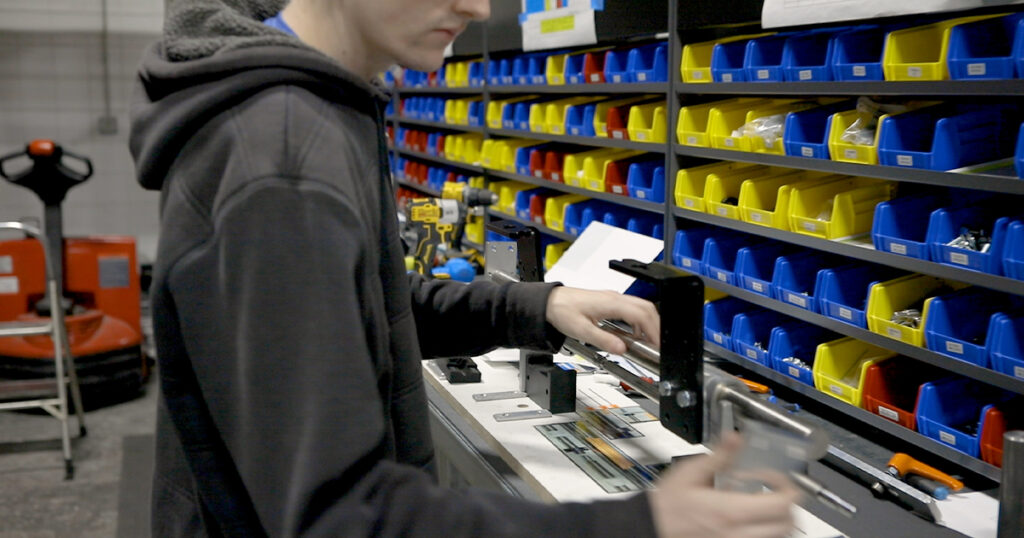
As manufacturing moved across the globe, maintaining consistency between the regions was vital. Lantech duplicated the production approach used at its Malden, Netherlands, facility, with the Louisville line mirroring the same layout, assembly processes, and build standards. This ensures machines produced in either location remain fully interchangeable.
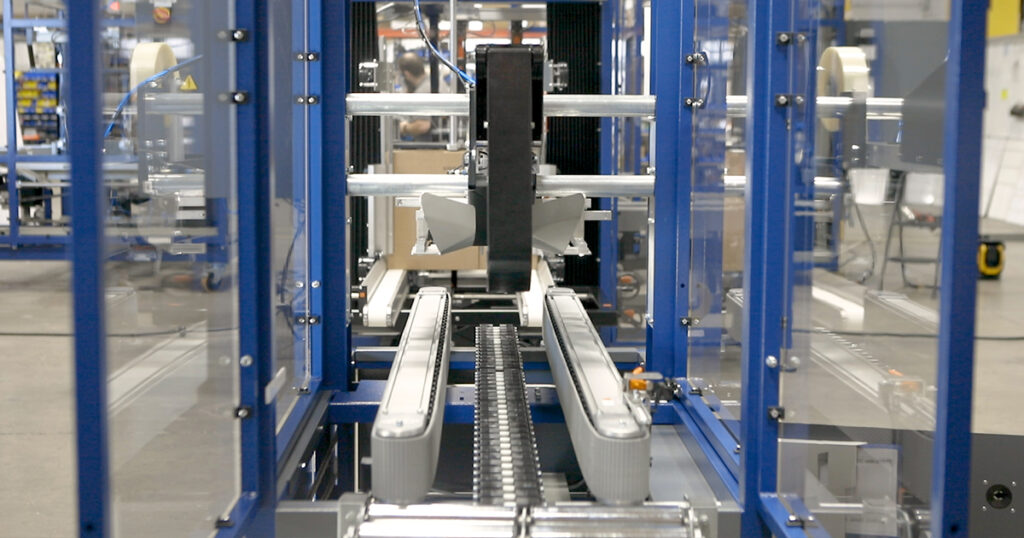
Lantech’s existing metal-fabrication operation, which also supports its stretch-wrapper business, helped accelerate the transition by supplying many of the components needed for the case sealers. The company also established a dedicated North American team for its case-equipment business, operating independently from its stretch-wrapper division.
“We completely separated the whole case business in North America from our stretch business,” he said. “It has its own management team, building, and operations team—probably 20 to 25 people, all incremental. That focus has really made a difference in how fast we can respond to customers.”

Looking ahead at U.S. production
With case sealer manufacturing now established in Louisville, Lantech plans to continue expanding its North American capabilities. Lancaster said the company expects to bring additional case-equipment models to the region as demand grows, including future tray and lid machines.
“We’ll keep developing new features and equipment that reduce downtime and minimize operator interaction—helping our customers run their production lines more efficiently and reliably,” he said.
He added that the Louisville operation’s proximity to UPS Worldport for expedited parts delivery helps the company prioritize reliability, serviceability, and lead-time stability.