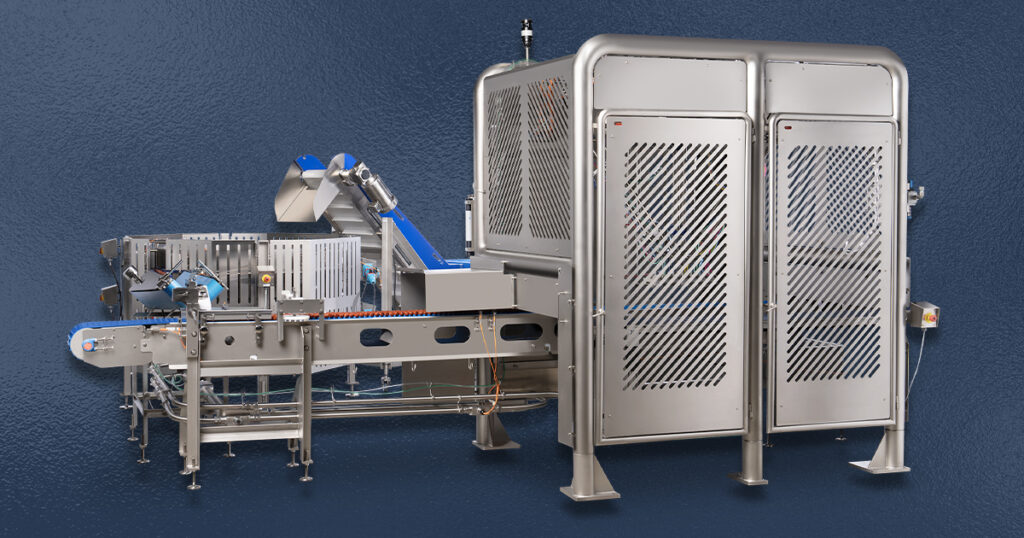
JLS Automation will debut its Kestrel, a high-speed hygienic robotic collate-and-load system, at the International Production and Processing Expo (IPPE) in Atlanta later this month.
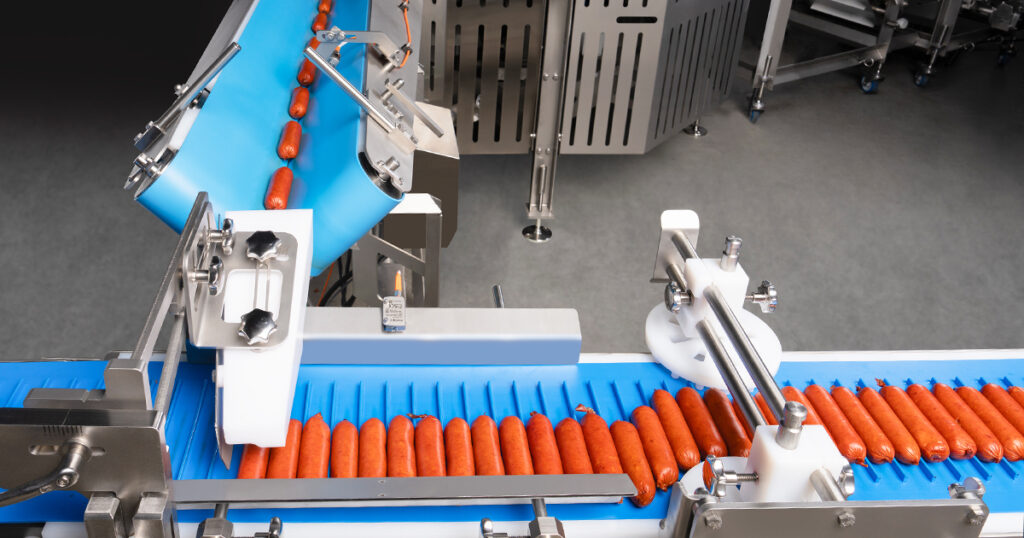
The compact system handles up to 500 uniform cylindrical protein products per minute, including meat snack sticks and straight sausages, using centrifugal technology to singulate products from bulk infeed.
Waheed Chaudhry, director of primary packaging and integrated systems at JLS Automation, spoke with Packaging OEM about how the Kestrel differs from conventional systems.
“Kestrel replaces intermittent motion in conventional collate-and-load systems with continuous rotary acceleration to singulate and orient products for robotic loading,” said Chaudhry. “This reduces mechanical impact points and minimizes frictional contact. The continuous-feed design also enables higher sustained throughput and maintains precise product control, reducing damage rates to less than 1%.”
Robotic loading and labor efficiency
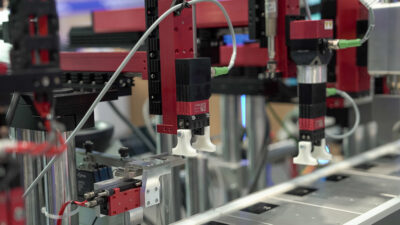
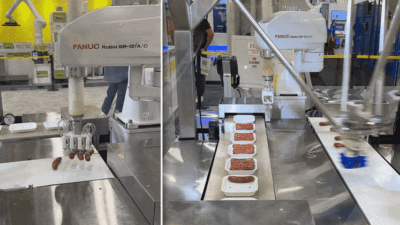
Once the products are singulated, they are transferred to a collation conveyor and loaded using delta kinematic robots. The system loads directly into thermoformer pockets and other primary packaging formats.
Chaudhry said the Kestrel can cut manual labor requirements by up to 50%. “Predictive maintenance analytics and integrated diagnostics simplify troubleshooting, reducing unplanned downtime, and supporting higher overall equipment effectiveness (OEE),” he said.
PODCAST | JLS Automation introduces Peregrine robotic cartoner
The centrifugal collate and robotic cells are designed to connect with upstream and downstream equipment, which can shorten commissioning time compared with traditional systems.
“These features lower lifecycle costs and improve reliability in high-speed packaging environments,” said Chaudhry.
Hygienic design for quick washdowns
Engineered for food packaging environments, the system uses an open, sloped-frame structure to promote drainage with passivated stainless-steel surfaces. It uses IP67- and IP69K-rated components and hygienic bearings with food-grade lubricants to support frequent sanitation.
“Its hygienic, toolless design and IP69K-rated components and open access design enable full washdown in under 20 minutes, compared to 45-60 minutes for conventional systems,” Chaudhrysaid.
To simplify cleaning and inspection, it offers tool-less removal of parts and full access to key areas. Additional features include FDA- and EC-compliant polymers, open cable management, and hygienic zoning.
“Together, these elements deliver a robust, easy-to-clean solution that supports food safety and operational efficiency,” said Chaudhry.

Subscribe to the Packaging OEM newsletter
Get the latest news, trends, and technology updates delivered straight to your inbox and make smarter packaging decisions.
Adapting to primary packaging formats
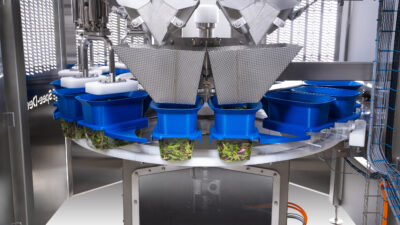
The Kestrel supports multiple primary packaging formats, including thermoformed trays, rigid trays, and bulk case loading.
“It accommodates straight uniform, varied lengths and sizes from single-serve packaging to multi-pack configurations,” said Chaudhry.
The recipe-driven changeover system can be completed in under 10 minutes, Chaudhry noted, allowing multiple SKUs to run on the same line.
“This flexibility supports mixed-product operations and seasonal variations while maintaining high throughput and consistent presentation,” said Chaudhry.
Packaging trends in 2026
In terms of food packaging, Chaudhry said manufacturers are prioritizing compact, modular automation that includes data and performance analytics, fits space-constrained, hygienic environments, and helps address labor gaps.
“In 2026, the competitive edge in food manufacturing won’t come from the biggest machine – it will come from the smartest small footprint: modular, hygienic, AI-ready, and operator-friendly,” he said.