It’s not often that flexible packaging sees the birth of an entirely new format, but at the Flexible Packaging Association’s Achievement Awards last month, that’s exactly what happened. And the idea came from a machine builder.
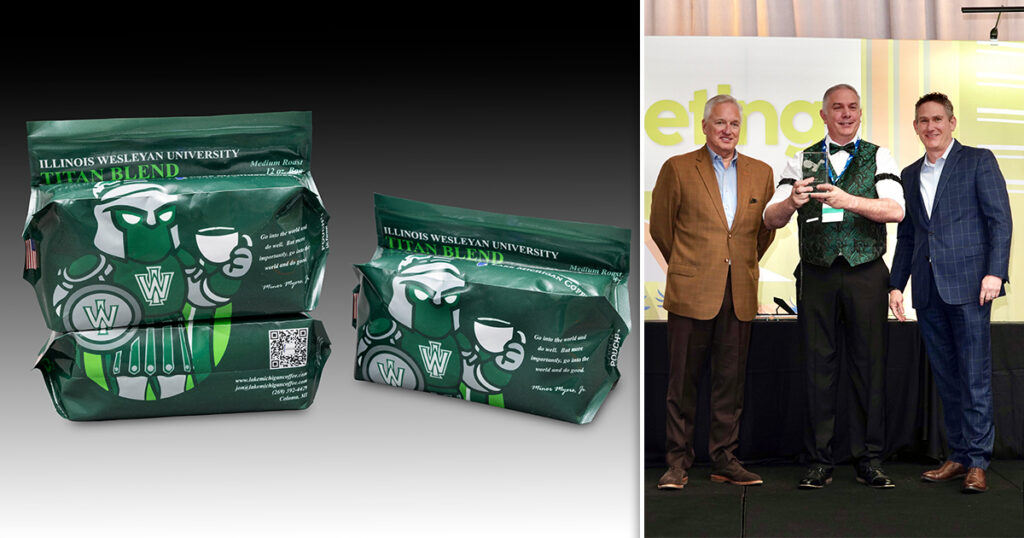
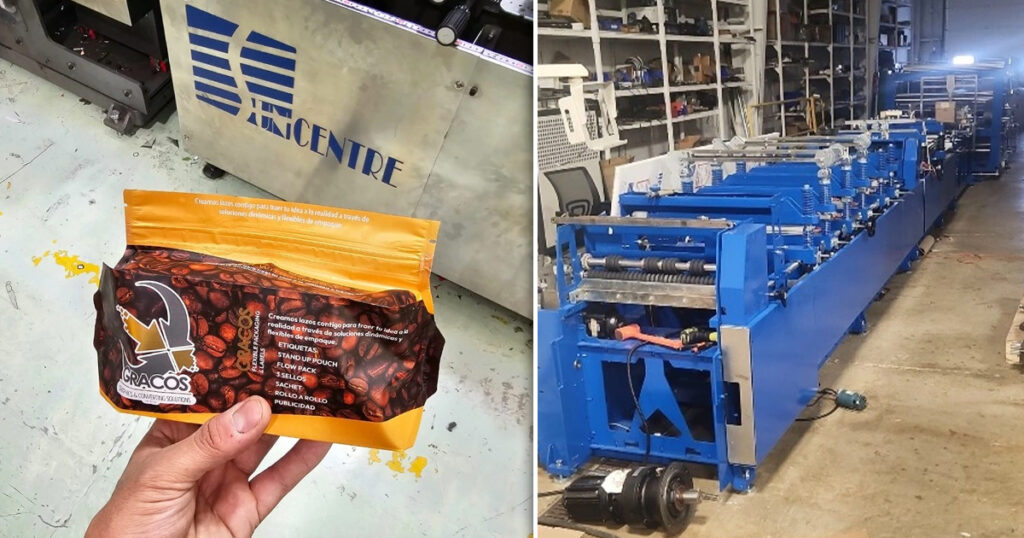
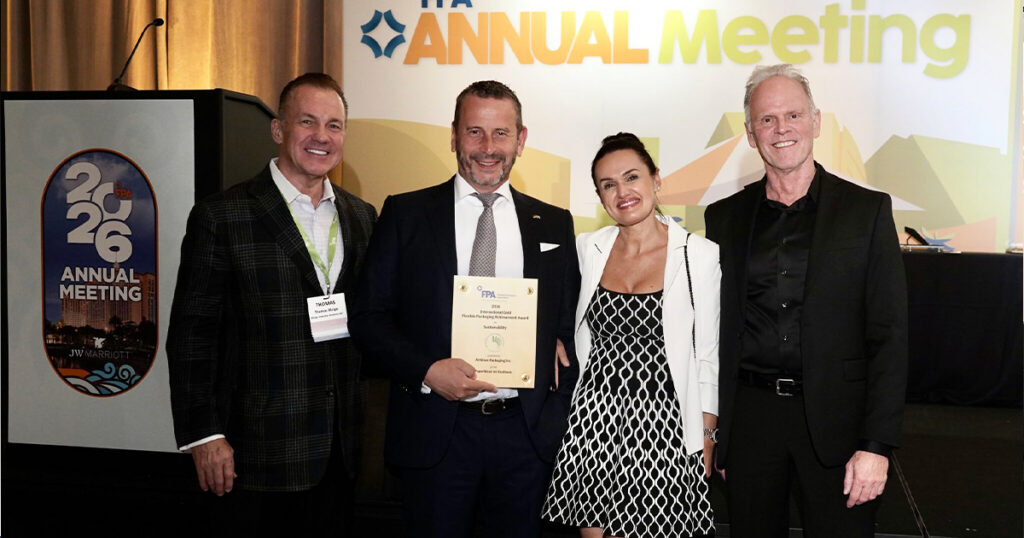
Sun Centre USA, an OEM known for building machinery for flexible pouches, received the Highest Achievement Award for its POUCH3 Cuboid format, along with Gold awards for packaging excellence and expanding the use of flexible packaging. The new structure is designed to reduce material use while improving how products are filled, shipped, and displayed on the store shelf.
This year’s awards reflect a shift in how packaging is being designed, with new formats emerging alongside changes in materials, a greater focus on reducing waste, improving recyclability, and maintaining compatibility with equipment already on the line.
As this year marks the organization’s 70th annual awards, it’s uncommon for a machine builder to take the top spot, according to Dani Diehlmann, vice president of communications for the Flexible Packaging Association.
“It’s very rare to do that, but Sun Centre created this brand-new package,” said Diehlmann during an interview with Packaging OEM. “It’s a new format that gives us sustainability options because it releases a lot of the header and the empty plastic waste. It’s another sustainable option for manufacturers.”
In addition to the cuboid structure, post-consumer recycled content (PCR) and paper-based cushioning stand out as examples of how design, materials, and equipment are being developed together.
Redesigning the pouch around the product
Traditional pouches like the stand-up and flat-bottom formats are designed around the filling process, not the product itself. This means space is left at the top of the package to allow for sealing, which can increase material use and reduce shipping efficiency.
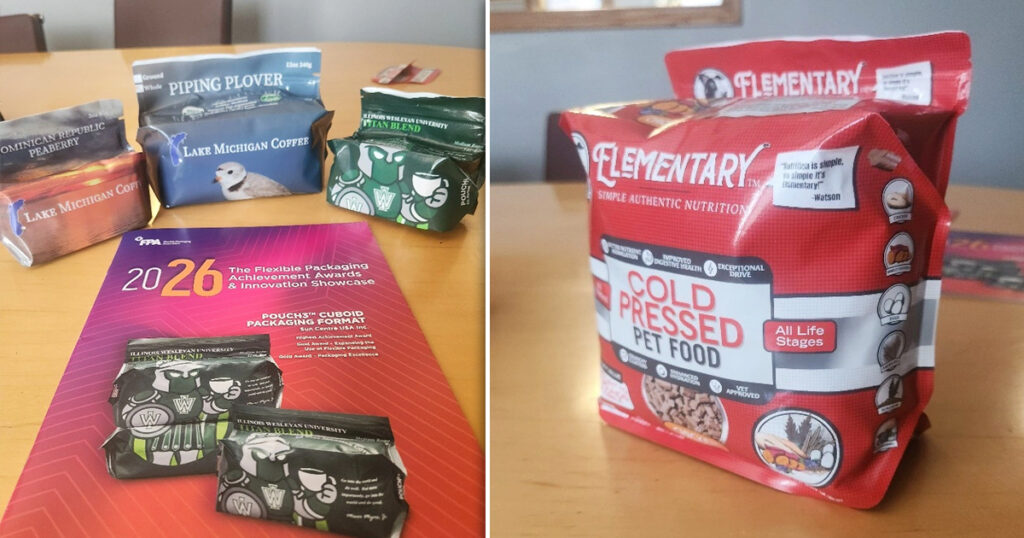
To address this, Sun Centre USA created the POUCH3 Cuboid format, a box-like flexible package that removes excess headspace by separating the closure from the product compartment. It allows manufacturers to fill packages more completely without risking seal failure while also reducing material use.
RESEARCH | Food Packaging: A Flexible Future and the Shelf-Ready Revolution
By focusing on how much of the package is actually used, the POUCH3 aims to reduce unnecessary material before it ever reaches recycling or disposal.
For Jim Pease, president and owner of Sun Centre USA, sustainability and design go hand in hand.
“Sustainability starts with reduce, and you can’t reduce without rethinking your design,” he said.
POUCH3’s design-first reduction can improve the material-to-volume ratio across applications ranging from pet food to cereal. Pease said this can translate to 10% to 30% less packaging heading to landfills.
Equipment suppliers move upstream in design
The recognition of a machinery supplier highlights how packaging is being developed. Historically, innovation has been driven by material suppliers and converters. Now OEMs are involved earlier in the design process, particularly as new formats must run on existing equipment.
RELATED | 2026 U.S. packaging laws reshape sustainable materials and machine design
While the POUCH3 reduces material use, it also does not require full line redesigns, as the bag can run on existing pouch and filling machines.
That combination of design alignment, the ability to run on installed equipment, and early OEM involvement is now earning recognition at the package level, not just on the machinery side.
“I’m a machine manufacturer. I’m not someone who makes bags for a living,” said Pease. “All these companies in the flexible industry that supply products to CPGs, I supplied those customers with equipment, and I won the packaging award.”
More than materials: sustainability in practice
Alongside format innovation, Diehlmann highlighted continued momentum in sustainable materials and packaging structures.
“There were a large number of entries with post-consumer (PCR) recycled content,” she said.
Other key trends for this year’s awards include:
- Transitioning to mono-material structures for improved recyclability
- Increased use of paper-based packaging
- Continued development of bio-based films and alternative materials
“You almost can’t have a package design these days without considering sustainability,” said Diehlmann.
RELATED | Designing the next-generation more sustainable package
The award process itself reflects the industry’s emphasis on real-world performance as judges evaluate physical samples and review both material composition and functional design.
“For the most part, a lot of our entries are predominantly food related, because that is the biggest segment of the industry,” said Diehlmann. “I think like 48% of the industry is food, and then medical and device packaging is our next largest segment.”
This year’s competition included 108 package submissions and 360 total entries across multiple categories, resulting in 36 achievement awards for 28 packages.
“It’s my favorite time of year,” said Diehlmann. “It’s a lot of work, but it’s really like Christmas when the submissions are coming in.”
From plastic pillows to paper cushioning
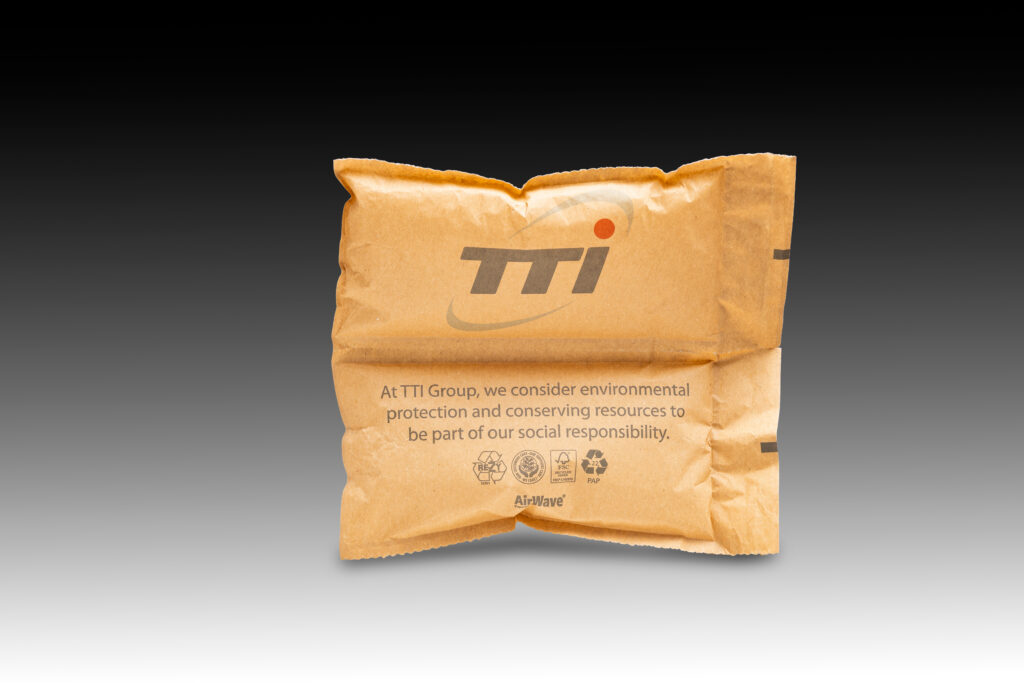
Among the sustainability-focused winners was AirWave Packaging, which received the International Gold Award for Sustainability for its PaperWave air cushions.
The cushions serve as an alternative to traditional, single-use plastic air pillows and use a paper-based structure made from recyclable paper with a compostable, potato-starch-based sealing layer.
The development reflects growing demand for alternatives to plastic in e-commerce packaging, particularly for void fill applications.
“AirWave’s PaperWave is a new concept of inflatable packaging with the advantages of compostability and recyclability,” said Marc Rapp, CEO of AirWave Packaging. “Combining the billboard and small footprint provides a ratio of 95% air and only 5% sustainable material.”
RELATED | A deep dive into flexible packaging: evolving sustainability, consumer convenience drives growth
Rapp said the idea for the cushions started with questions from the youngest members of his household.
“The initial inspiration really came from our kids, when they were asking if there’s no better solution than plastic to protect products,” he said. “It was a topic at school, and we realized that it is a concern for the next generation.”
Building on this classroom-inspired curiosity, Rapp is expanding the PaperWave concept to heavier-duty applications and developing versions that disappear on contact with water.
“We’re working on a new version of the PaperWave. AquaWave is one of them,” said Rapp. “We replace the biodegradable film with a water-soluble film, which dissolves in water in less than one minute.”
The team is working on offering smaller minimum quantities, so smaller manufacturers can get started without a large upfront commitment.
In sync: Design, materials, and equipment flex together
Advancements in flexible packaging are increasingly centered on materials, structure, and optimization, with progress relying on collaboration across the supply chain.
New formats like the POUCH3 and sustainability-backed initiatives such as PaperWave point to a growing role for structural design in reducing waste and improving efficiency.
For OEMs, that means adapting existing equipment to support new formats while taking a larger role in how those packages are developed.

Subscribe to the Packaging OEM newsletter
Get the latest news, trends, and technology updates delivered straight to your inbox and make smarter packaging decisions.